
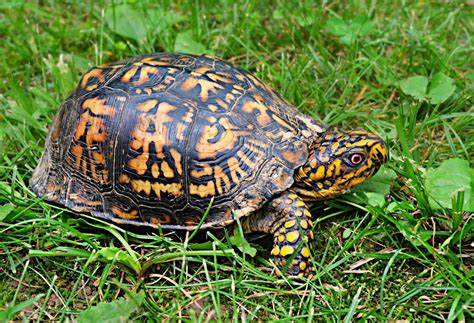
Eastern Box Turtle
Terrapene carolina
A terrestrial turtle known for its domed shell and ability to completely close its shell for protection.
Overview
The eastern box turtle is a terrestrial reptile native to the eastern United States, recognized for its domed shell and hinged plastron that allows it to retract fully for protection. These turtles are known for their longevity and unique, colorful shell patterns.
Native Regions
North America
Habitats
Forests, Grasslands
Adult Length
4-6 inches
Adult Weight
5-10 pounds
Lifespan
30–40 years
For Beginners
Not recommended due to specific care requirements and long lifespan
For Experienced Keepers
Suitable for experienced reptile keepers
Key Points
- › Terrestrial and diurnal
- › Omnivorous diet
- › Requires a spacious enclosure with specific temperature and humidity levels
Appearance & Behavior
Eastern box turtles have a high-domed, oval-shaped carapace with variable coloration, often featuring yellow, orange, or olive patterns on a dark brown or black background. Adults typically measure 4.5 to 6 inches (11 to 15 cm) in length.
Normal Behavior
Diurnal and terrestrial; they are generally solitary and can be shy, often retreating into their shells when threatened.
Social Behavior
Primarily solitary; interactions are usually limited to breeding activities.
Warning Signs
Lethargy, refusal to eat, swollen eyes, or nasal discharge may indicate health issues.
Key Points
- › Active during the day
- › Prefers solitary existence
- › Can be shy and reclusive
Enclosure & Environment
Enclosure Size
Outdoor: at least 4 x 4 feet; Indoor: minimum 75-gallon terrarium.
Enclosure Type
Outdoor enclosures are ideal; indoor enclosures should be large and well-ventilated.
Substrate
Moist substrates like cypress mulch, sphagnum moss, or a soil-sand mix.
Heating
Ambient temperature between 75-85°F (24-29°C); basking spot at 85-90°F (29-32°C).
Humidity
Maintain humidity levels between 70-80%.
Lighting
Full-spectrum UVB lighting for 10-12 hours daily.
Décor & Enrichment
Provide hiding spots, shallow water dishes, and plants to simulate natural cover.
Cleaning & Maintenance
Spot clean daily; replace substrate and disinfect enclosure monthly.
Key Points
- › Requires a spacious, secure enclosure
- › Proper lighting and temperature gradients are essential
- › High humidity levels are crucial
Diet & Nutrition
Eastern box turtles are omnivores, consuming a varied diet that includes insects, fruits, vegetables, and fungi.
Food Types
Earthworms, snails, slugs, berries, leafy greens, and mushrooms.
Feeding Schedule
Feed adults every other day; juveniles daily.
Supplements
Dust food with calcium powder 2-3 times a week and multivitamins once a week.
Hydration
Provide a shallow water dish for drinking and soaking; maintain enclosure humidity.
Preparation
Offer food on a flat surface; chop fruits and vegetables into manageable pieces.
Common Mistakes
Over-reliance on one food type; lack of dietary variety can lead to nutritional deficiencies.
Key Points
- › Requires a varied diet of animal and plant matter
- › Regular supplementation is important
- › Access to clean water is essential
Handling
With gentle and regular handling, eastern box turtles can become accustomed to human interaction, though they may remain shy.
Techniques
Approach slowly and handle gently, supporting the turtle’s body securely.
Do's & Don'ts
Do not flip the turtle onto its back; avoid handling during feeding or when the turtle is hiding.
Taming
Regular, gentle handling can help reduce shyness over time.
Stress Signals
Retreating into the shell, hissing, or attempting to bite.
Key Points
- › Requires patience and gentle handling
- › May remain shy despite regular interaction
Health & Wellness
Common Health Issues
Respiratory Infections
Description
Often due to low temperatures or high humidity.
Symptoms
Wheezing, nasal discharge, lethargy.
Prevention
Maintain proper temperature and humidity levels.
Treatment
Consult a veterinarian; may require antibiotics.
Shell Rot
Description
Bacterial or fungal infection of the shell.
Symptoms
Soft spots, foul odor, discoloration.
Prevention
Keep enclosure clean and dry; ensure proper basking areas.
Treatment
Veterinary care; cleaning and debridement of affected areas.
Vitamin A Deficiency
Description
Caused by inadequate diet.
Symptoms
Swollen eyes, respiratory issues, lethargy.
Prevention
Provide a varied diet rich in leafy greens and vegetables.
Treatment
Vitamin A supplementation under veterinary guidance.
Preventative Care
Regular veterinary check-ups; maintain proper diet and habitat conditions.
Emergency Signs — seek vet care immediately
Severe lethargy, refusal to eat, open-mouth breathing, swollen eyes.
Key Points
- › Proper husbandry prevents most health issues
- › Monitor health and behavior closely
Breeding
Eastern box turtles are oviparous, with females laying eggs in nests dug into the soil.
Preparation
Provide a nesting area with moist, soft substrate for egg-laying females.
Breeding Process
Females lay 3-8 eggs per clutch, typically in late spring to early summer.
Egg Care
Incubate eggs at 80-85°F (27-29°C) with appropriate humidity; incubation lasts about 70-90 days.
Hatchling Care
Provide a humid environment with appropriate diet and protection from predators.
Key Points
- › Breeding requires specific conditions
- › Clutch sizes vary
- › Incubation and hatchling care are critical