
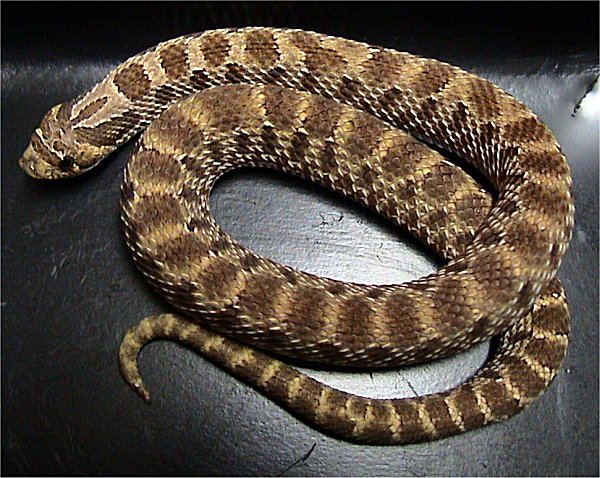
Western Hognose Snake
Heterodon nasicus
A small, stout, day-active North American snake known for burrowing, dramatic defensive displays, and rear-fanged venom that is usually mild but can occasionally cause medically significant reactions.
Overview
The Western hognose is a stout, fossorial snake of prairie and other open habitats in southern Canada and the central United States. Its upturned rostral scale helps it dig through loose soil. When frightened it may hiss, flatten its neck, feign strikes, or roll over and play dead. It is rear-fanged and produces venom adapted for prey; most human bites cause limited local effects, but significant swelling, blistering, prolonged symptoms, and a rare blood-platelet complication have been documented.
Native Regions
Southern Alberta, Saskatchewan, and Manitoba, Great Plains and adjacent central United States
Habitats
Shortgrass and mixed-grass prairie, Sandy or gravelly grasslands and savannas, River terraces and open scrub, Loose, well-drained soils suitable for burrowing
Adult Length
Males typically 1-2 feet; females up to about 3 feet
Adult Weight
Strongly sex-dependent; no reliable typical adult range was established by the selected sources
Lifespan
10–20 years
For Beginners
Many captive-bred Western hognoses are manageable, but this record classifies them as intermediate because young snakes may refuse unscented rodents, the enclosure must balance dry air with access to hydration, and bites can occasionally produce medically significant effects. Local ownership rules must also be checked.
For Experienced Keepers
Experienced keepers can refine seasonal light and temperature cycles, varied whole-prey nutrition, naturalistic burrowing enrichment, and breeding while monitoring weight closely and avoiding unnecessary brumation or breeding risks.
Key Points
- › Provide a secure terrestrial enclosure with deep burrowing substrate and a measured heat gradient.
- › House singly and feed appropriately sized frozen-thawed whole prey.
- › Avoid food-scented hands and take every bite seriously despite the species' generally mild reputation.
Appearance & Behavior
Western hognoses have a stout body, keeled dorsal scales, a broad neck, and a sharply upturned rostral scale used for digging. Brown, tan, olive, or gray ground colors usually carry darker dorsal blotches, while the underside of the tail is predominantly dark. Females are generally longer and heavier than males; cited captive guidance places males around 1-2 feet and females up to about 3 feet.
Normal Behavior
This primarily diurnal snake may alternate between surface exploration, basking, and extended periods buried in substrate. Defensive behavior can include loud hissing, neck flattening, closed-mouth feigned strikes, cloacal musk, and thanatosis or playing dead. These displays indicate fear and should prompt the keeper to reduce stress.
Social Behavior
Western hognoses are solitary outside reproductive encounters. Cohabitation is unnecessary and can create competition, feeding accidents, and chronic stress, so keep one snake per enclosure except for brief, supervised breeding introductions by experienced keepers.
Warning Signs
Repeated open-mouth breathing, wheezing, nasal or oral discharge, swelling around the face, mouth lesions, regurgitation, persistent refusal to eat with weight loss, inability to right itself, abnormal lumps, mites, skin sores, or repeated incomplete sheds require prompt husbandry review and reptile-veterinary advice.
Key Points
- › A burrowing, day-active snake with distinctive bluffing displays.
- › Females are substantially larger than males.
- › Defensive displays are stress behavior, not entertainment.
Enclosure & Environment
Enclosure Size
At least 36 x 18 x 18 inches for an adult. Although some sources permit smaller quarters for adult males, this minimum lets either sex stretch, move, burrow, and choose among meaningful thermal zones.
Enclosure Type
Secure, well-ventilated front-opening vivarium or tightly clipped terrestrial enclosure with no gaps the snake can lever open.
Substrate
Provide 3-4 inches or more of clean, low-dust, diggable substrate such as aspen or a keeper-tested topsoil-based mix. Paper is useful for quarantine but does not support long-term burrowing. Avoid cedar, pine, aromatic woods, pure loose sand, sharp particles, and persistently wet bedding.
Heating
Create a 90-95°F basking surface at one end and a 75-85°F gradient through the enclosure, with a cooler retreat around the low-to-mid 70s. Use a thermostat or dimming control, digital probe thermometers, and an infrared thermometer. Turn visible heat lamps off at night and provide guarded, lightless heat only if the room would fall below about 68°F.
Humidity
Maintain about 40-50% relative humidity with good ventilation and a water bowl on the cool side. Keep the main substrate dry rather than dusty or waterlogged, and offer a localized humid hide during shedding if needed.
Lighting
Provide a consistent 12-hour day cycle. Use low-to-medium output linear UVB, such as approximately 5-6%, over part of the enclosure with shaded retreats and installation distance based on the lamp manufacturer or measured output. Replace or test the lamp as directed; do not place the enclosure in direct window sunlight.
Décor & Enrichment
Provide multiple snug hides, cork, artificial or safe live plants, leaf litter, stable rocks, low branches, and other cover. Include a heavy, shallow water bowl large enough for soaking without making the enclosure damp.
Cleaning & Maintenance
Remove feces, urates, shed, and soiled substrate promptly; replace water daily; clean the bowl regularly; and perform periodic full cleaning with a reptile-safe disinfectant, rinsing and drying all surfaces before reassembly. Track temperature, humidity, weight, feeding, and sheds.
Key Points
- › Use at least 36 x 18 x 18 inches for an adult and prioritize usable floor area.
- › Deep substrate, snug hides, visual cover, and escape prevention are essential.
- › Keep the enclosure dry and ventilated while offering fresh water and a humid retreat when needed.
Diet & Nutrition
Western hognoses are carnivores and feed heavily on amphibians in nature. Captive-bred animals are commonly maintained on appropriately sized frozen-thawed whole mice; confirm before acquisition that a young snake is feeding reliably on the intended captive diet.
Food Types
Use whole frozen-thawed mice as the practical staple. A reptile veterinarian may help plan safe whole-prey variety or a nutritionally complete commercial whole-prey product. Do not collect wild amphibians or reptiles because of parasite, toxin, pesticide, conservation, and legal risks, and do not offer live rodents that can injure the snake.
Feeding Schedule
Offer hatchlings a small meal about every 3-5 days, juveniles every 5-7 days, and most adults every 7-14 days. Adjust frequency to sex, age, season, activity, and measured body condition rather than feeding whenever the snake shows a response.
Supplements
A balanced whole-prey diet normally needs no routine vitamin or mineral powder. Do not add supplements or injectable vitamins without direction from a qualified reptile veterinarian.
Hydration
Keep fresh water available at all times in a stable bowl on the cool side, sized so the snake can soak if it chooses. Replace the water daily and clean the bowl whenever fouled.
Preparation
Thaw prey in the refrigerator, warm it in a sealed bag shortly before feeding, and offer it with long, soft-tipped tongs. Choose prey around the width of the head or thickest body section; oversized prey increases regurgitation risk. Feed over a clean surface or dish if loose substrate sticks to prey.
Common Mistakes
Avoid live prey, oversized meals, excessive feeding, handling for 24-48 hours after a meal, unmonitored seasonal fasting, repeatedly changing foods without checking husbandry, and assuming persistent appetite loss is normal when the snake is losing weight.
Key Points
- › Use appropriately sized frozen-thawed whole prey.
- › Base feeding intervals on age and body condition, not begging behavior.
- › Verify that a juvenile is feeding reliably before acquisition.
Handling
A settled, consistently feeding Western hognose can usually tolerate short, gentle handling, but handling always carries a bite risk and should stop when the snake shows escalating stress.
Techniques
Wash hands thoroughly after touching prey or other animals. Approach from the side, support the body with both hands, keep the snake away from the face, and guide rather than grip it. Use feeding tongs and a small hook or barrier to distinguish enclosure access from feeding.
Do's & Don'ts
Do not handle during the initial acclimation period, during shedding, or for 24-48 hours after feeding. Never provoke defensive displays, restrain the head casually, hand-feed, or handle with prey odor on the skin. Keep children and vulnerable people under close adult supervision and check local regulations.
Taming
Wait until the snake is eating reliably, then begin with brief sessions of about five minutes and increase gradually only while it remains calm. Predictable, low-stress contact is safer than frequent forced handling.
Stress Signals
End or postpone handling if the snake persistently hisses, flattens its neck, repeatedly feigns strikes, musks, thrashes, attempts frantic escape, or plays dead. Recurrent displays suggest the sessions or enclosure need adjustment.
Key Points
- › Wash away prey odor and never hand-feed.
- › Support the body and keep early sessions brief.
- › Bites are uncommon but can cause significant local or, rarely, systemic effects.
Health & Wellness
Common Health Issues
Respiratory disease
Description
Respiratory infection can follow unsuitable temperature or humidity, poor ventilation, unsanitary conditions, parasites, malnutrition, or other disease.
Symptoms
Wheezing, clicking, repeated yawning, open-mouth breathing, nasal or oral bubbles or discharge, lethargy, or reduced appetite.
Prevention
Maintain the measured thermal gradient, 40-50% humidity, good ventilation, sanitation, quarantine, and routine weight and behavior records.
Treatment
Open-mouth breathing or discharge needs prompt examination by a qualified reptile veterinarian for diagnostic testing and prescribed treatment; do not use leftover antibiotics or raise temperatures beyond the normal safe range.
Infectious stomatitis and oral injury
Description
Trauma, retained debris, poor husbandry, or opportunistic infection can damage the mouth and may progress into deeper tissues or respiratory disease.
Symptoms
Facial swelling, scabs along the lips, mouth not closing normally, red spots, thick material or discharge in the mouth, appetite loss, or difficulty swallowing.
Prevention
Use correctly sized prey, smooth furnishings, safe substrate, clean conditions, and regular visual checks without forcibly opening the mouth.
Treatment
Contact a qualified reptile veterinarian promptly; diagnosis may require examination, sampling, imaging, debridement, and prescription medication.
Impaction, regurgitation, and gastrointestinal obstruction
Description
Oversized prey, low digestive temperatures, foreign substrate ingestion, dehydration, or other disease can impair normal digestion and passage.
Symptoms
Repeated regurgitation, persistent swelling, straining, abnormal posture, reduced fecal output, marked lethargy, or weight loss.
Prevention
Offer correctly sized prey, maintain the heat gradient, keep loose substrate off wet prey, provide fresh water, and avoid handling for 24-48 hours after feeding.
Treatment
Repeated regurgitation, progressive swelling, severe lethargy, or suspected obstruction requires prompt reptile-veterinary assessment; do not force-feed, soak, massage, or medicate without direction.
Dysecdysis and skin disease
Description
Incomplete shedding or dermatitis may be associated with unsuitable humidity, mites, dehydration, infection, poor surfaces, or persistently wet and contaminated bedding.
Symptoms
Retained eye caps or skin, repeated patchy sheds, coarse scales, mites, redness, blisters, ulcers, or discharge.
Prevention
Provide fresh water, a humid hide when needed, textured safe furnishings, dry clean substrate, quarantine, and routine skin and shed checks.
Treatment
Consult a qualified reptile veterinarian for retained eye caps, wounds, mites, blisters, or repeated poor sheds; never pull retained eye caps or use pesticides not prescribed for reptiles.
Preventative Care
Arrange an initial examination and annual health checks with a reptile-experienced veterinarian. Quarantine new reptiles with separate equipment, record weight and feeding, inspect complete sheds, verify thermometers and thermostats, maintain hygiene, and wash hands after animal, prey, or enclosure contact because reptiles may carry Salmonella.
Emergency Signs — seek vet care immediately
Seek urgent reptile-veterinary care for severe breathing difficulty, inability to right, seizures, major trauma, persistent bleeding, repeated regurgitation, rapid swelling, or profound lethargy. After a human bite, obtain medical or poison-center advice for progressive pain or swelling, blistering, discoloration, bleeding, faintness, breathing difficulty, or any systemic symptom.
Key Points
- › Temperature, humidity, ventilation, sanitation, and diet affect disease risk.
- › Persistent appetite loss must be interpreted alongside measured weight and other signs.
- › Veterinary testing is necessary because similar signs can have different causes.
Breeding
Western hognoses are egg-laying snakes. In the wild, mating follows seasonal dormancy and females typically place elongated eggs in shallow soil excavations in early summer.
Preparation
Breed only healthy, mature, unrelated animals after veterinary review, with separate permanent enclosures, reliable feeding and weight records, a plan for difficult hatchlings, and confirmed homes. Seasonal cooling and breeding can create serious health risks and should not be improvised.
Breeding Process
Experienced breeders condition the sexes separately and use brief supervised introductions after an appropriate seasonal cycle. The selected natural-history source reports clutches of 2-24 eggs, commonly laid in July.
Egg Care
The selected source reports an incubation interval of roughly 30-60 days but does not provide a complete captive protocol. Use a validated specialist protocol with calibrated equipment and seek experienced or veterinary help rather than guessing moisture or temperature.
Hatchling Care
House hatchlings individually in secure, appropriately scaled enclosures with a thermal gradient and hides. Confirm normal shedding and hydration, record weight, and establish repeated independent feeding before sale or transfer; some hatchlings can be reluctant to accept rodents.
Key Points
- › Females lay clutches of 2-24 eggs.
- › Seasonal cycling and incubation require specialist preparation.
- › Plan for individually housed hatchlings that may be difficult to establish on food.