
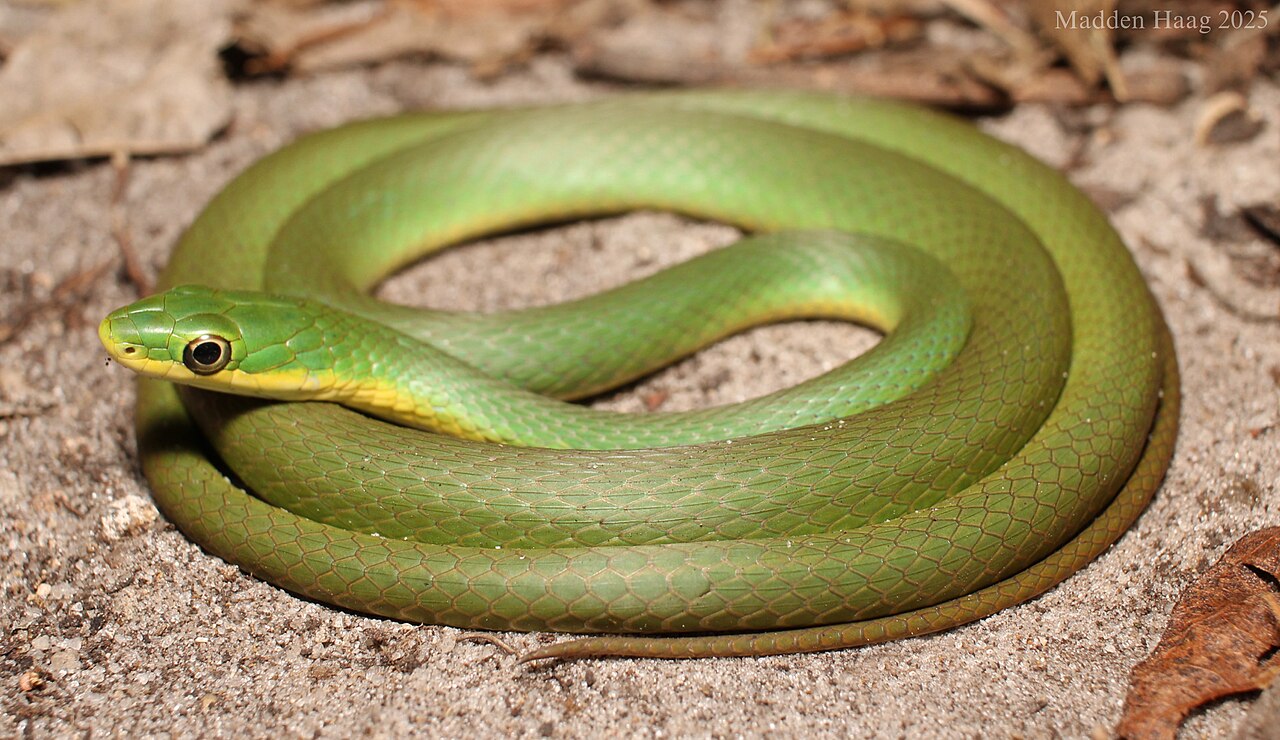
Rough Green Snake
Opheodrys aestivus
A slender, diurnal, insect-eating North American snake best kept as a low-handling display animal in a densely planted arboreal enclosure.
Overview
The Rough Green Snake, Opheodrys aestivus, is a highly arboreal, day-active colubrid from vegetated edges and waterways of the southeastern and south-central United States and northeastern Mexico. Unlike most commonly kept snakes, it eats insects and other invertebrates rather than rodents. Its delicate build, stress sensitivity, specialized diet, and frequent wild-collected origin make it an intermediate display species.
Native Regions
Southeastern and south-central United States, Mid-Atlantic United States, Northeastern Mexico
Habitats
Dense shrubs, vines, and trees near water, Riparian woodland and wetland margins, Open forest and woodland edges, Hedgerows, fields, and other vegetated edge habitat
Adult Length
Usually 22-36 inches (56-91 cm); exceptional individuals may be longer
Adult Weight
About 9-54 grams, with females generally heavier than males
Lifespan
5–15 years
For Beginners
This is not an ideal first snake. It requires reliable live feeder variety, close weight and hydration monitoring, dense arboreal cover, careful ventilation, and restraint about handling. Wild-collected animals may arrive stressed, dehydrated, or parasitized and should not be purchased.
For Experienced Keepers
Experienced keepers can refine measured low-level UVB, a vertical thermal and humidity gradient, live planting, natural hunting opportunities, and quiet quarantine while documenting feeding, feces, sheds, and body weight.
Key Points
- › Provide a tall, escape-proof enclosure packed with foliage and connected branches.
- › Feed varied, gut-loaded captive-bred invertebrates rather than rodents.
- › Choose a legally obtained captive-bred animal and minimize handling.
Appearance & Behavior
Adults are exceptionally slender, usually about 22-36 inches (56-91 cm), with strongly keeled dorsal scales, a vivid green back, a cream-to-yellow belly, round pupils, and large eyes. Females average longer and heavier than males. Published wild measurements span roughly 9-54 grams depending on sex.
Normal Behavior
This diurnal visual hunter moves slowly through branches and foliage in search of insects and spiders. It may freeze or sway when approached, relying on camouflage, and commonly rests coiled in vegetation. It should use shaded cover as well as warmer elevated perches.
Social Behavior
Routine individual housing is recommended. Although rough green snakes may not appear overtly aggressive and communal nesting occurs in nature, solitary housing makes feeding, feces, weight, shedding, and health much easier to monitor and prevents competition or hidden decline.
Warning Signs
Sustained weight loss, prolonged food refusal, weak grip, persistent floor sitting, poor coordination, repeated incomplete sheds, swelling, abnormal feces, mites, mouth discharge, wheezing, bubbles, or open-mouth breathing require prompt review and reptile-veterinary advice.
Key Points
- › A slender, keeled-scaled, highly arboreal snake.
- › Active by day and reliant on camouflage rather than aggression.
- › House singly for dependable health and feeding monitoring.
Enclosure & Environment
Enclosure Size
At least 18 x 18 x 36 inches for one adult. Larger planted enclosures are preferable when branch networks and environmental gradients remain usable.
Enclosure Type
A secure front-opening glass or PVC arboreal terrarium with controlled ventilation and a fine, locked screen top.
Substrate
Use 2-3 inches of additive-free coconut fiber, suitable reptile soil, cypress-based bedding, or a planted soil system with leaf litter. Keep it lightly moisture-retentive but never saturated; avoid cedar, gravel, dusty material, and pesticide or fertilizer residues.
Heating
Create an upper warm perch around 84-90°F, broader branch-level air temperatures from about 72-84°F, and nights around 68-75°F. Control every heat source with a thermostat and measure at occupied perch heights. Avoid uniformly heating the enclosure or forcing exposure; field research found active snakes usually tracked shaded air and rarely basked openly.
Humidity
Maintain roughly 50-70% relative humidity with fresh airflow, a clean water bowl, and misted foliage that can dry between cycles. Measure humidity at mid-height and provide a localized humid retreat during shedding rather than keeping the whole enclosure wet.
Lighting
Provide a bright 11-13 hour seasonal day cycle or a consistent approximately 12-hour cycle. This care plan includes low-output UVB over part of the enclosure, positioned according to the lamp manufacturer's measured distance guidance, with dense shade and no glass or plastic between lamp and animal.
Décor & Enrichment
Fill the enclosure with firmly anchored branches and vines of varied diameters, cork hollows, elevated resting cover, and dense nontoxic foliage. Provide both exposed and shaded routes, a secure upper warm perch, and a stable bowl of fresh water.
Cleaning & Maintenance
Remove feces, shed, dead prey, and contaminated substrate promptly. Replace water daily and clean the bowl whenever soiled. Inspect elevated foliage and branches for waste, service substrate before it becomes foul, and disinfect with reptile-safe products followed by complete rinsing and drying.
Key Points
- › Minimum adult enclosure: 18 x 18 x 36 inches.
- › Dense connected foliage and branches are essential, not optional decoration.
- › Measure heat and humidity at branch level and balance moisture with ventilation.
- › Provide low-level UVB with shade and a thermostatted warm perch.
Diet & Nutrition
Rough Green Snakes are specialized insectivores that need a varied supply of appropriately sized, well-fed captive-bred invertebrates. They should not be converted to a rodent diet.
Food Types
Rotate gut-loaded crickets, suitable small roaches, silkworms, hornworms, black soldier fly larvae, and captive-produced moths, flies, or grasshoppers where legal. Use mealworms sparingly within a varied diet and reserve fatty waxworms for occasional use or short-term appetite support.
Feeding Schedule
Offer young snakes small meals several times weekly. Feed adults multiple insects two or three times weekly, adjusting prey count and interval to measured weight, body condition, age, and prey size.
Supplements
Because published schedules differ, use light rather than heavy dusting: calcium about every other feeding and a reptile multivitamin about weekly is a starting point, not a universal prescription. Match vitamin D3 intake to the measured UVB plan, follow product limits, and review the regimen with a qualified reptile veterinarian.
Hydration
Keep fresh water continuously available in a stable bowl and replace it daily. Mist foliage as needed to create drinking droplets and temporary humidity increases, but do not rely on misting alone or leave the enclosure continuously wet.
Preparation
Use captive-produced prey no wider than the snake's head. Gut-load feeders for 24-48 hours, dust lightly immediately before feeding, offer food during daylight activity, and remove uneaten insects before they stress or injure the snake. Avoid wild insects because pesticide, parasite, and toxin exposure is unknown.
Common Mistakes
Do not feed rodents, depend on one feeder species, use oversized or contaminated wild prey, leave large numbers of insects loose, over-supplement, let the snake lose weight unnoticed, or confuse a naturally slender build with permission to accept declining condition.
Key Points
- › Feed varied captive-bred insects and other suitable invertebrates.
- › Adults generally eat two or three times weekly; monitor weight and adjust.
- › Gut-load feeders and use restrained, UVB-aware supplementation.
- › Provide both clean standing water and drinking droplets.
Handling
Rough Green Snakes are best treated as observation animals. They rarely bite, but their slender body and strong reliance on camouflage make routine handling a significant stress risk.
Techniques
Handle only when necessary for health checks, transport, or enclosure work. Move slowly, support the body continuously with open hands, allow the snake to move rather than restraining it, and work over a low safe surface inside a closed room.
Do's & Don'ts
Do let a new snake settle and feed consistently before unavoidable handling. Do not grab tightly, pull it from branches, handle immediately after feeding, permit falls, or use handling as taming practice. Wash hands before and after contact.
Taming
Do not pursue tolerance through repeated handling. Build predictable feeding and maintenance routines, use front access, preserve visual cover, and let the snake acclimate to quiet observation.
Stress Signals
Stop if the snake freezes for a prolonged period, thrashes, repeatedly flees, musks, gapes, loses its grip, breathes abnormally, or remains hidden and refuses food after interactions.
Key Points
- › Best kept as a display snake, not a handling pet.
- › Support the entire delicate body during necessary movement.
- › Reduce contact if behavior, feeding, or weight indicates stress.
Health & Wellness
Common Health Issues
Chronic stress, dehydration, and feeding failure
Description
Sparse housing, repeated handling, collection and shipping, unsuitable prey, or incorrect temperature and moisture can produce a cycle of hiding, food refusal, dehydration, and weight loss.
Symptoms
Sustained food refusal, declining weight, weak grip, wrinkled skin, repeated poor sheds, lethargy, or persistent exposure on the enclosure floor.
Prevention
Choose captive-bred stock, provide dense cover and secure climbing routes, minimize disturbance, maintain measured heat and humidity, offer varied prey, and record weight and feeding.
Treatment
Correct unsafe husbandry without abrupt extremes and contact a qualified reptile veterinarian promptly when refusal is prolonged, weight declines, grip weakens, or dehydration is suspected.
Internal or external parasites
Description
Snakes, especially those collected from the wild or of uncertain origin, may carry gastrointestinal parasites, mites, or ticks. Cryptosporidium has been reported in this species.
Symptoms
Weight loss, regurgitation, diarrhea or abnormal feces, mid-body swelling, poor appetite, anemia, visible mites or ticks, or declining condition.
Prevention
Buy captive-bred animals, quarantine every newcomer with separate tools, arrange an initial reptile-veterinary examination and fecal testing, and maintain strict hygiene.
Treatment
Contact a qualified reptile veterinarian for identification and species-appropriate treatment; do not use unprescribed dewormers, pesticides, or mite treatments.
Respiratory disease and infectious stomatitis
Description
Respiratory and mouth disease can be associated with infectious agents, injury, poor nutrition, inadequate cleaning, crowding, or unsuitable temperature and humidity.
Symptoms
Wheezing, gurgling, nasal or oral bubbles, open-mouth breathing, thick or bloody mouth mucus, swollen gums, sour odor, lethargy, or loss of appetite.
Prevention
Maintain stable measured temperatures, ventilation without drafts, appropriate humidity, clean furnishings and water, individual housing, quarantine, and balanced nutrition.
Treatment
Seek prompt care from a qualified reptile veterinarian for examination and diagnostic testing. Open-mouth breathing, marked swelling, or severe weakness is an emergency.
Retained shed and dermatitis
Description
Conditions that are too dry can contribute to retained shed, while persistently wet or dirty surfaces can contribute to inflamed or infected skin.
Symptoms
Retained eye caps or tail-tip shed, repeated patchy sheds, red or blistered ventral scales, sores, swelling, or discoloration.
Prevention
Provide dependable hydration, a localized humid retreat, surfaces with time to dry, fresh airflow, clean branches and substrate, and post-shed inspection.
Treatment
Have retained eye caps, constricting tail shed, blisters, sores, or spreading discoloration assessed by a qualified reptile veterinarian; do not pull retained tissue or apply unprescribed medication.
Preventative Care
Arrange a baseline examination and fecal screen, especially when origin is uncertain; quarantine newcomers with separate equipment; and log weight, appetite, prey, feces, shedding, temperature, and humidity. Have persistent changes assessed early by a reptile-experienced veterinarian.
Emergency Signs — seek vet care immediately
Seek immediate reptile-veterinary care for open-mouth or labored breathing, severe weakness, loss of grip or coordination, regurgitation with decline, marked swelling, bloody or thick oral discharge, extensive blistering, rapid weight loss, or unresponsiveness. This husbandry information is educational and is not a diagnosis.
Key Points
- › Stress and hydration problems can rapidly become serious in this delicate species.
- › Quarantine and fecal screening are particularly important when origin is uncertain.
- › Breathing difficulty, weakness, oral discharge, and rapid weight loss need prompt veterinary care.
Breeding
Wild Rough Green Snakes usually mate in spring and lay soft-shelled eggs in early summer. Females leave shoreline vegetation to use moist protected cavities, and communal nests have been documented.
Preparation
Attempt captive breeding only with healthy, legally obtained, well-acclimated adults after veterinary screening and with a plan for incubation, tiny live prey, individual monitoring, and homes for offspring. Do not prescribe seasonal cooling without a complete evidence-based protocol.
Breeding Process
Published field accounts place male maturity at about 20-21 months and female maturity at roughly 21-33 months. Typical clutches contain 3-12 eggs, while a broader Florida account reports 1-14. Oviposition commonly occurs in June and July in protected moist cavities.
Egg Care
A field nest hatched after 50 days across fluctuating 77-94°F conditions, while cited controlled laboratory incubation at 82°F took about 36-39 days. These observations are not a complete home protocol; use current specialist literature and experienced veterinary or breeder oversight for substrate moisture, temperature, and monitoring.
Hatchling Care
Hatchlings are tiny insectivores requiring escape-proof individual monitoring, dense fine foliage, carefully sized live prey, stable hydration, and accurate low-intensity heat and UVB. Confirm that each animal feeds and maintains weight.
Key Points
- › Spring breeding is followed by early-summer egg laying.
- › Typical published clutch size is 3-12 eggs.
- › Incubation observations vary with conditions and are not a complete captive protocol.