
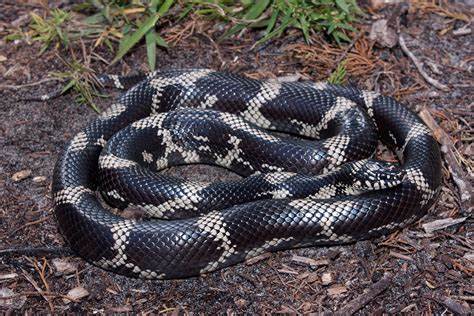
Eastern King Snake
Lampropeltis getula
A medium-sized snake known for its striking black and white bands, native to the southeastern United States.
Overview
The Eastern Kingsnake is a non-venomous snake native to the southeastern United States. Known for its striking black or dark brown scales adorned with yellow or white chain-like patterns, this species is popular among reptile enthusiasts due to its manageable size and generally docile nature.
Native Regions
United States
Habitats
Forests, Grasslands
Adult Length
3-4 feet
Adult Weight
1-2 pounds
Lifespan
15–20 years
For Beginners
Suitable for beginners willing to commit to proper husbandry
For Experienced Keepers
Also suitable for experienced snake keepers
Key Points
- › Terrestrial and diurnal
- › Carnivorous diet
- › Requires a secure enclosure with appropriate heating and humidity levels
Appearance & Behavior
Eastern Kingsnakes are characterized by their glossy black or dark brown scales with yellow or white chain-like patterns along their bodies. Adults typically measure between 3 to 5 feet (0.9 to 1.5 meters) in length, with a slender build and a short, stout head.
Normal Behavior
They are generally active and curious, often exploring their environment during daylight hours. When threatened, they may vibrate their tails or emit a musk as a defense mechanism.
Social Behavior
Solitary by nature and should be housed individually to prevent stress and potential cannibalistic behavior.
Warning Signs
Refusal to eat, open-mouth breathing, wheezing, or visible skin lesions may indicate health issues.
Key Points
- › Active and curious
- › Solitary disposition
- › May exhibit defensive behaviors when threatened
Enclosure & Environment
Enclosure Size
A 20-gallon tank is suitable for juveniles; adults require a 40-gallon or larger enclosure.
Enclosure Type
Glass or plastic terrarium with a secure lid.
Substrate
Aspen bedding, cypress mulch, or coconut fiber are suitable choices.
Heating
Create a thermal gradient with a warm side of 85-90°F (29-32°C) and a cool side of 70-78°F (21-26°C).
Humidity
Maintain humidity levels between 35-45%; increase to approximately 60% during shedding.
Lighting
While not strictly necessary, providing a light cycle of 12 hours light and 12 hours dark can be beneficial.
Décor & Enrichment
Provide at least two hides (one on each side of the temperature gradient) and climbing branches.
Cleaning & Maintenance
Spot clean as needed; perform a thorough cleaning of the enclosure monthly.
Key Points
- › Secure enclosure with appropriate thermal gradient
- › Maintain proper humidity levels
- › Provide hiding spots and environmental enrichment
Diet & Nutrition
Carnivorous diet consisting primarily of appropriately sized rodents.
Food Types
Mice or rats, depending on the size of the snake.
Feeding Schedule
Juveniles: every 5-7 days; Adults: every 10-14 days.
Supplements
Generally not necessary with a proper diet.
Hydration
Provide a water dish large enough for the snake to soak in; change water regularly.
Preparation
Offer pre-killed prey to prevent injury to the snake.
Common Mistakes
Overfeeding or offering prey that is too large.
Key Points
- › Diet of appropriately sized rodents
- › Regular feeding intervals based on age
- › Access to clean water is essential
Handling
Eastern Kingsnakes are generally tolerant of handling but may be shy initially.
Techniques
Support the snake’s body fully and handle gently.
Do's & Don'ts
Avoid handling during shedding or after feeding; always wash hands before and after handling.
Taming
Regular, gentle handling can help acclimate them to human interaction.
Stress Signals
Tail vibrating, musking, or attempting to bite indicate stress.
Key Points
- › Generally tolerant of handling
- › Handle gently and support the body
- › Regular handling can reduce shyness
Health & Wellness
Common Health Issues
Respiratory Infections
Description
Often caused by inadequate temperatures or humidity.
Symptoms
Wheezing, open-mouth breathing, nasal discharge.
Prevention
Maintain proper environmental conditions.
Treatment
Consult a veterinarian; may require antibiotics.
Mites
Description
External parasites that feed on the snake’s blood.
Symptoms
Frequent soaking, visible tiny black or red spots.
Prevention
Quarantine new animals; maintain cleanliness.
Treatment
Use reptile-safe mite treatments and thoroughly clean the enclosure.
Stomatitis (Mouth Rot)
Description
Bacterial infection of the mouth.
Symptoms
Swollen, red, or pus-filled mouth.
Prevention
Ensure proper husbandry and reduce stress.
Treatment
Requires veterinary care for cleaning and antibiotics.
Preventative Care
Regular health checks and maintaining proper husbandry.
Emergency Signs — seek vet care immediately
Severe lethargy, significant weight loss, or abnormal behavior.
Key Points
- › Proper husbandry prevents most health issues
- › Monitor health and behavior closely
Breeding
Breeding in captivity is common and involves specific environmental cues.
Preparation
Gradually reduce temperatures to simulate the breeding season.
Breeding Process
Introduce the male to the female’s enclosure; copulation may occur over several days.
Egg Care
Females lay 8-20 eggs, which should be incubated at 82-84°F (28-29°C) with proper humidity.
Hatchling Care
Provide appropriately sized enclosures and prey items; ensure proper temperature and humidity.
Key Points
- › Breeding requires environmental manipulation
- › Proper incubation of eggs is crucial
- › Hatchlings need appropriate care and feeding