
African House Snake
Boaedon capensis
A slender, mostly nocturnal southern African constrictor that is usually manageable but needs an escape-proof enclosure, a measured heat gradient, and careful feeding.
Overview
The African house snake staged here is Boaedon capensis, also called the Cape or brown house snake. It is a nonvenomous southern African constrictor often found near people because rodents and geckos gather around buildings. Captive-bred animals are generally hardy, but their small size, speed, strong feeding response, and ability to exploit tiny gaps require attentive care.
Native Regions
South Africa, Mozambique, Zambia, Zimbabwe, Botswana, Eswatini, Lesotho, Malawi
Habitats
Savanna and grassland, Scrub and woodland, Rocky and semi-arid habitats, Gardens, farms, and residential areas
Adult Length
Males 24-30 inches (60-75 centimeters); females 35-48 inches (90-120 centimeters)
Adult Weight
Males usually under 150 grams; large females rarely exceed 300 grams
Lifespan
12–20 years
For Beginners
A healthy captive-bred individual can suit a prepared beginner. The keeper must reliably control heat, prevent escapes, feed whole rodents, recognize illness, and handle a quick juvenile without dropping or squeezing it.
For Experienced Keepers
Experienced keepers can refine measured low-level UVB, seasonal conditions, naturalistic enrichment, locality or morph records, quarantine, and ethical breeding without pushing females into repeated clutches.
Key Points
- › This record specifically covers Boaedon capensis, not every snake called an African house snake.
- › Use a secure, enriched enclosure with warm and cool retreats.
- › Feed measured whole prey and monitor body condition because this species readily overfeeds.
Appearance & Behavior
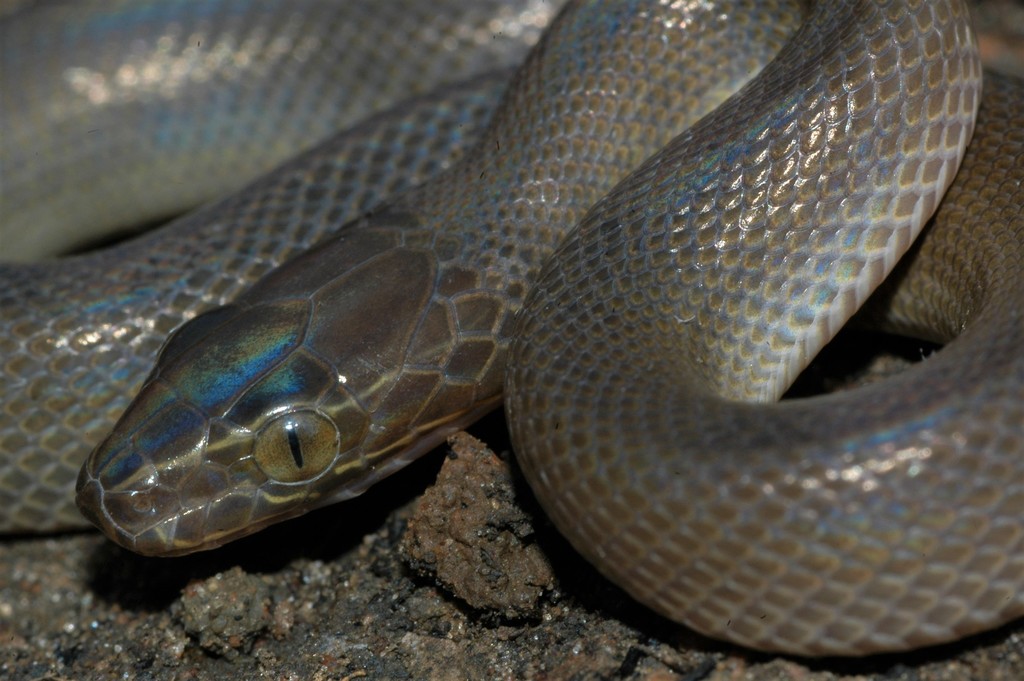
This is a slender, smooth-scaled snake with a glossy iridescent sheen, a broad oval head, large eyes with vertical pupils, and pale stripes extending from the snout past the eyes. Brown is typical, but color and pattern vary. Females are substantially larger than males, reaching about 35-48 inches compared with roughly 24-30 inches for males.
Normal Behavior
African house snakes are mostly nocturnal or crepuscular. They hide through much of the day, explore and climb after dark, tongue-flick while investigating, constrict prey, and move between warm and cool retreats to regulate body temperature.
Social Behavior
House one snake per enclosure. Their strong feeding response creates a cannibalism risk, and continuous male-female housing can impose repeated breeding and avoidable strain on the female.
Warning Signs
Persistent open-mouth breathing, wheezing, bubbles or mucus, repeated regurgitation, unexplained weight loss, prolonged appetite change, inability to right, swelling, mouth lesions, retained shed, skin blisters, or visible mites require prompt husbandry review and reptile-veterinary advice.
Key Points
- › Mostly active around dusk and at night.
- › Females are markedly larger than males.
- › Solitary housing avoids feeding and breeding risks.
Enclosure & Environment
Enclosure Size
Use at least 48 x 24 x 24 inches for an adult so a large female can approximately straighten and the enclosure can hold useful thermal, light, and cover gradients. A smaller adult male may use less space, but larger secure housing with adequate cover remains beneficial.
Enclosure Type
Front-opening PVC, wood, or glass vivarium with secure latches, fine-gap ventilation, and guarded heat and light equipment.
Substrate
Use clean, low-dust substrate such as additive-free topsoil-based mix, coconut fiber, cypress mulch, aspen, or paper during quarantine. Avoid cedar, pine, aromatic products, sharp particles, and persistently wet bedding.
Heating
Create an accessible basking or warm surface around 84-90°F and an ambient cool zone around 72-78°F, with nights around 68-75°F. Control every heat source with the appropriate thermostat, guard overhead equipment, and verify surfaces with an infrared thermometer and air temperatures with digital probes.
Humidity
Maintain roughly 40-60% relative humidity with effective ventilation and offer a humid hide during shedding. Correct isolated dryness without leaving the whole enclosure wet; chronically damp, stagnant conditions increase skin and respiratory risk.
Lighting
Provide a consistent 10-12 hour day cycle. Use measured low-level UVB over part of the enclosure with foliage, shaded retreats, and a zero-UV refuge; do not use visible night lights. The exact species-specific UV index has not been established, so avoid unmeasured high-output exposure.
Décor & Enrichment
Provide at least two snug hides, cork, leaf cover or plants, stable branches and ledges, safe rough surfaces for shedding, and a heavy fresh-water bowl. Keep all heavy objects supported so the snake cannot undermine or topple them.
Cleaning & Maintenance
Remove feces, urates, shed, and soiled substrate promptly; replace drinking water daily and whenever contaminated. Clean the bowl regularly, deep-clean according to substrate and enclosure needs, rinse disinfectants completely, and use separate equipment during quarantine.
Key Points
- › Escape prevention is a primary safety requirement.
- › Provide a controlled warm-to-cool gradient without sacrificing secure hides.
- › Balance moderate humidity with ventilation and a localized humid retreat.
Diet & Nutrition
African house snakes are opportunistic carnivores. Wild B. capensis consume mostly small vertebrates, while captive-bred animals generally thrive on appropriately sized whole frozen-thawed rodents.
Food Types
Use mice as the usual staple, with appropriately sized rats only for larger individuals and occasional suitable whole avian prey for variety. Do not offer wild-caught prey, loose meat, or live rodents when safe frozen-thawed prey is accepted.
Feeding Schedule
Offer juveniles one meal about every 5-7 days and adults about every 10-14 days. Adjust the interval and prey size to growth, sex, activity, reproductive status, and recorded body condition rather than the snake's persistent feeding response.
Supplements
Routine vitamin or mineral dusting is not recommended for a healthy snake eating varied, nutritionally complete whole prey unless a qualified reptile veterinarian identifies a specific need.
Hydration
Provide fresh water at all times in a stable bowl large enough for optional soaking. Place it where spills will not make the warm hide or the entire substrate persistently wet.
Preparation
Thaw prey completely using reptile-dedicated equipment, warm it safely, and offer with feeding tongs. Choose prey around the width of the snake's widest point, supervise feeding, and discard uneaten thawed prey rather than refreezing it.
Common Mistakes
Avoid overfeeding, oversized prey, routine live feeding, handling soon after a meal, dirty water, and assuming every refusal is behavioral. Repeated refusal, regurgitation, or weight loss needs environmental review and veterinary assessment.
Key Points
- › Whole frozen-thawed mice are the practical staple.
- › Feed by body condition, not by the snake's strong appetite.
- › Routine supplements are unnecessary with complete whole prey.
Handling
Many captive-bred adults tolerate calm handling, but juveniles may be quick, defensive, and prone to launching from an open enclosure. Handling is optional and should never replace enclosure-based enrichment.
Techniques
Approach from the side, lift gently, support the body with both hands, and let the snake move without gripping it. Handle low over a clear surface until its speed and behavior are familiar.
Do's & Don'ts
Allow a new snake to settle and feed consistently before routine handling. Wash hands before and after contact, keep the snake away from food-preparation areas, and do not handle during shedding, active distress, or for at least 24-48 hours after feeding. Never lift by the tail or restrain the neck.
Taming
Build tolerance through brief, predictable sessions after acclimation. Increase duration gradually only while the snake remains calm and maintains normal feeding and shelter use.
Stress Signals
Stop and return the snake to its enclosure if it repeatedly flees, thrashes, musk-releases, flattens or coils defensively, strikes repeatedly, breathes abnormally, or cannot obtain secure support.
Key Points
- › Support the body and anticipate quick movement.
- › Keep early sessions brief and low to the ground.
- › Pause handling around meals, shedding, or signs of stress.
Health & Wellness
Common Health Issues
Respiratory disease
Description
Bacterial, viral, fungal, parasitic, or irritant-related respiratory disease may be promoted by unsuitable temperature, humidity, ventilation, hygiene, or other illness.
Symptoms
Wheezing, gurgling, nasal or oral mucus, open-mouth breathing, lethargy, appetite loss, or abnormal head posture.
Prevention
Maintain the measured thermal and humidity gradients, fresh airflow, clean dry refuges, quarantine, and routine monitoring.
Treatment
Contact a qualified reptile veterinarian promptly; respiratory disease needs diagnosis and veterinary-directed treatment, not leftover antibiotics or unmeasured home remedies.
Infectious stomatitis and skin infection
Description
Mouth and skin infections can follow injury, contaminated conditions, chronic dampness or dryness, retained shed, poor nutrition, or systemic illness.
Symptoms
Swollen gums, thick or cheesy mouth material, foul odor, refusal to eat, red or blistered belly scales, sores, discharge, or incomplete shed.
Prevention
Use safe furnishings and prey, correct humidity, a humid hide, clean substrate and water, and regular close visual checks.
Treatment
Arrange reptile-veterinary examination promptly. Advanced infections may require cultures, cleaning, prescription medication, and supportive care.
Internal and external parasites
Description
Wild-caught or exposed snakes may carry intestinal parasites, mites, or ticks that can cause disease and spread through a collection.
Symptoms
Visible dark mites, excessive soaking, irritation, diarrhea, regurgitation, swelling, anemia, appetite change, or weight loss.
Prevention
Choose captive-bred animals, quarantine newcomers with separate tools, obtain a veterinary wellness and fecal assessment, and prevent contact with wild prey.
Treatment
Consult a reptile veterinarian for identification and species-appropriate treatment; enclosure decontamination and assessment of exposed reptiles may also be required.
Preventative Care
Record weight, feeding, sheds, behavior, temperature, and humidity; quarantine newcomers; wash hands after handling the snake, prey, or enclosure; maintain clean water and substrate; and establish care with a qualified reptile veterinarian before an emergency.
Emergency Signs — seek vet care immediately
Seek urgent reptile-veterinary care for open-mouth or labored breathing, thick oral discharge or pus, repeated regurgitation, severe weakness, inability to right, neurologic signs, major trauma, persistent bleeding, marked swelling, or rapid unexplained weight loss.
Key Points
- › Husbandry errors can contribute to respiratory, mouth, and skin disease.
- › Quarantine and veterinary screening reduce parasite and infection risks.
- › Illness signs are not diagnoses and need reptile-veterinary assessment.
Breeding
B. capensis is egg-laying and breeds in summer in the wild. Captive house snakes can be prolific, so breeding requires separate housing, mature animals in excellent condition, and a realistic plan for every offspring.
Preparation
Do not breed immature or underweight animals. Confirm sex through an experienced reptile veterinarian or qualified keeper, quarantine both animals, document genetics and lineage, and plan veterinary care, incubation, hatchling enclosures, and placements before pairing.
Breeding Process
Introduce adults only for supervised breeding periods and separate them afterward. A receptive female must have a secure laying box with suitably moist substrate; continuous cohabitation and repeated forced production can compromise welfare.
Egg Care
Specialist genus-level guidance reports laying about 6-8 weeks after mating and incubation near 84-86°F for roughly 60 days. Because small temperature and moisture errors can kill embryos, use a validated protocol and experienced guidance rather than treating these numbers as a complete recipe.
Hatchling Care
House hatchlings individually in tiny-gap-secure enclosures with appropriate heat, hides, water, and simple monitoring substrate. Offer correctly sized prey after the first shed and track every meal, shed, and weight; seek experienced help for non-feeders rather than improvising risky methods.
Key Points
- › Breed only mature, well-conditioned animals with separate permanent housing.
- › Prevent repeated clutches from exhausting females.
- › Prepare secure individual hatchling setups before pairing adults.