
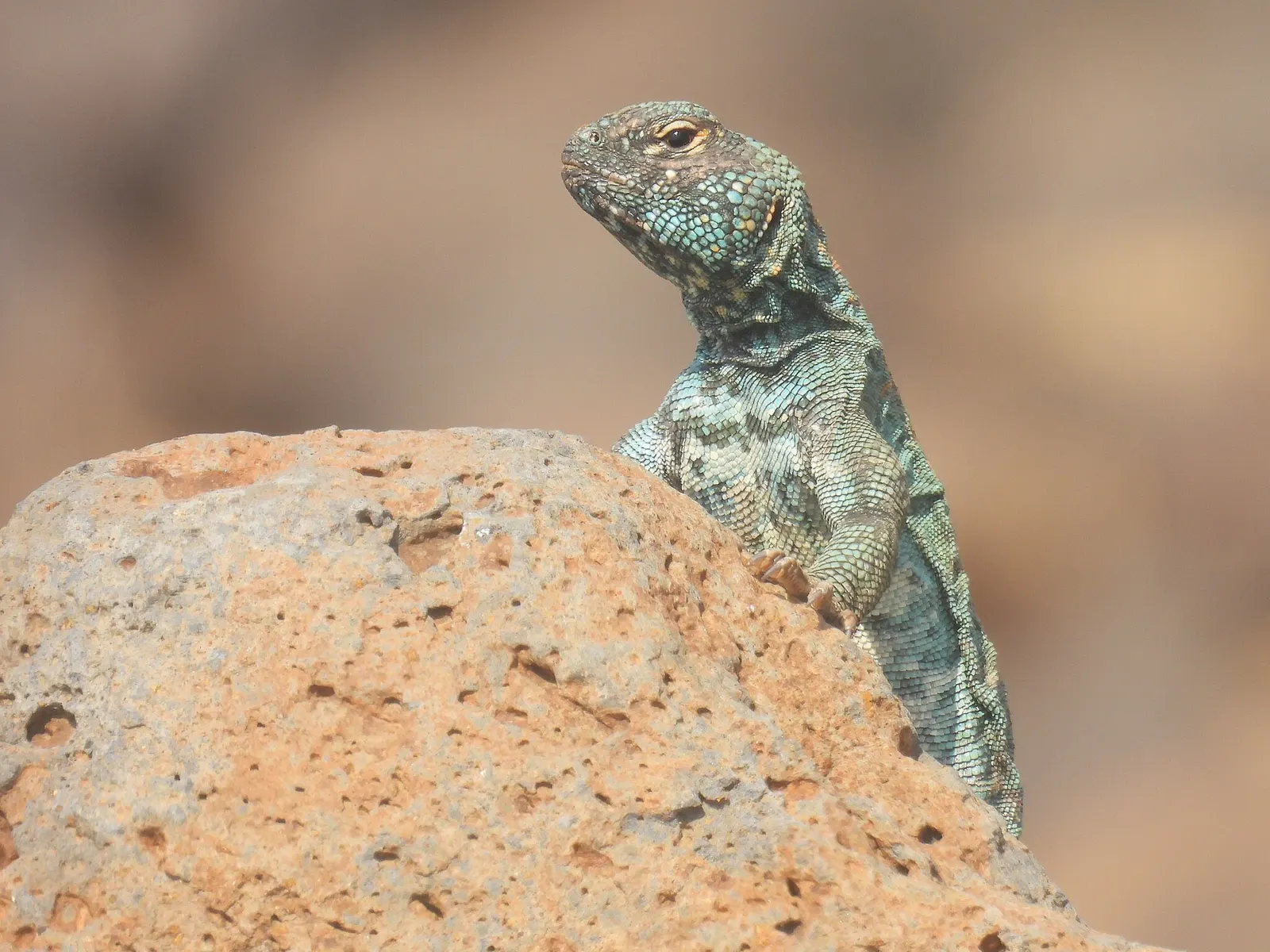
Ornate Uromastyx
Uromastyx ornata
A medium-sized, diurnal desert agamid from rocky wadis in Egypt, Israel, Saudi Arabia, and Yemen. Adults need a large, very hot, brightly lit, and dry enclosure, a varied leafy diet, and are best kept singly.
Overview
The ornate uromastyx (Uromastyx ornata), also called the ornate mastigure or ornate spiny-tailed lizard, is a medium-sized agamid from extreme rocky desert in Egypt (including Sinai), Israel, Saudi Arabia, and Yemen. Two subspecies are recognized: U. ornata ornata in the north of the range and U. ornata philbyi in southwestern Saudi Arabia and northwestern Yemen. It was long treated as a subspecies of Uromastyx ocellata. Adults are diurnal heat-lovers with a heavy spiny tail, a mostly plant diet, and a need for a large, dry, intensely lit enclosure. The species is listed as Least Concern with a decreasing population, and the genus is regulated in international trade under CITES Appendix II. Prefer an established captive-bred animal over a wild-caught import.
Native Regions
Egypt, including the Sinai Peninsula, Israel, Saudi Arabia, Yemen
Habitats
Extreme rocky desert with very low rainfall, Steep rocky wadis with crevices, cracks, and sparse desert shrubs, Hot rocky slopes, with feeding and nesting visits to the wadi floor
Adult Length
Typically about 10-15 inches (25-38 cm) total length; large adults up to about 16 inches (40 cm)
Adult Weight
Wild animals are often above about 180 grams once adult-sized and can reach about 300 grams; a typical captive weight range is not well published
Lifespan
15–20 years
For Beginners
A poor first reptile. Animals kept too cool often stop eating and lose condition, and chronically damp air is also harmful. The setup needs a roomy enclosure, several heat lamps, high-output UVB, and thermometers that can read a very hot basking surface. Many individuals stay shy for months. Choose a hardier, lower-heat species if this is a first lizard.
For Experienced Keepers
A good project for a keeper who can hold a broad, 120-130°F basking surface, a real cool zone near 80°F, bright UVB with shade, and ambient humidity around 20-35%. Ornate uromastyx climb rock work more readily than some larger Uromastyx. Seasonal slowing in fall and winter is common. Breeding requires separate housing, a nest site, and spare enclosures.
Key Points
- › Diurnal desert lizard from rocky wadis in Egypt, Israel, Saudi Arabia, and Yemen.
- › Needs a large dry enclosure, a 120-130°F basking surface, strong UVB, and low humidity.
- › Primarily herbivorous and best housed alone.
Appearance & Behavior
A stout, flattened agamid with a broad triangular head, strong limbs, and a thick tail ringed with spines. The tail is not dropped if grabbed. Typical adults are about 10-15 inches (25-38 cm) in total length; published maxima reach about 16 inches (40 cm) and about 300 grams. U. ornata philbyi is described as slightly smaller, with a shorter, broader tail, than U. ornata ornata. Males are more brightly colored—green, blue, or sometimes red, often with yellow or brown markings. Females are usually duller brown with dark spots and a pale belly. Females are reported to be as large as males, or larger. Color can shift through the day and is used in thermoregulation, so a change in shade is not by itself a sign of illness.
Normal Behavior
Strictly diurnal and most active in the hottest part of the day. In nature they bask and shelter in rock crevices on steep wadi slopes and come down to feed or nest. Field animals have been reported to hold body temperatures around 100-106°F (38-41°C). Captive animals bask for long periods, climb stable rock stacks, dig, and retreat into tight crevices. A clear fluid sneeze that dries to white salt is a normal nasal salt-gland secretion. In winter many individuals eat less, bask less, and stay hidden; activity usually returns as days lengthen. Keep a warm basking option available even during a slowdown.
Social Behavior
Wild ornate uromastyx may live alone or in a small group, but dominant males chase other males and animals can leave. In a cage they cannot. Veterinary sheets sometimes describe one male with several females if aggression is watched closely. Specialist keepers who work with this genus generally house adults alone because fighting can be subtle and injuries show up late. The app treats them as not suitable for routine cohabitation. Any breeding introduction should be supervised, with a spare enclosure ready.
Warning Signs
Sunken eyes, a thin tail or thighs, visible ribs or pelvic bones, swollen jaw or limbs, tremors, difficulty walking, open-mouth breathing, discharge from the eyes or mouth, blood in the stool, burns, nose rubbing, retained shed cutting into toes or the tail tip, or a sudden stop in eating outside a normal winter rest all need a husbandry review and a reptile veterinarian. Straining without producing eggs is urgent.
Key Points
- › Spiny-tailed desert agamid; males brighter, females often as large or larger.
- › Basks and climbs by day; salt sneezes and winter slowdowns can be normal.
- › House adults singly except for supervised breeding.
Enclosure & Environment
Enclosure Size
Minimum for one adult about 48 x 24 x 24 inches (120 x 60 x 60 cm). That matches specialist guidance for Uromastyx shorter than roughly 16-18 inches. Some veterinary guidance recommends about 5-6 feet of length for the genus, and larger is better. A 40-gallon tank is too small for an adult. Juveniles can use the adult enclosure if hides are secure and gaps cannot trap them.
Enclosure Type
Wooden or PVC vivarium with a mesh or well-vented top, or a very well-ventilated glass enclosure. The box must tolerate intense heat. Front doors make maintenance less stressful than reaching in from above.
Substrate
For a healthy animal, several inches of packed play sand, sandy soil, or a sand-and-soil mix allows digging. Paper or slate is simpler for quarantine, illness, or a new arrival you are still assessing. Avoid calcium sand, crushed walnut shell, seed bedding, and very dusty substrates. Secure rocks so the lizard cannot dig underneath and be crushed.
Heating
Heat from above with halogen floods so the basking surface, not just the air, reaches about 120-130°F (49-54°C) across an area large enough for the whole body. Daytime air should grade from a cool end near 80-85°F (27-29°C) to warmer air in the 90s°F, within the published 80-100°F ambient band. Measure surface and air separately. At night, a drop into the mid-60s to mid-70s°F is appropriate; add gentle night heat only if the enclosure would fall below about 65°F (18°C). Animals kept without a hot enough basking site often stop eating and lose weight. Newly arrived animals may do better if the cool end is held a little warmer, near 82°F, while they settle.
Humidity
Keep ambient relative humidity about 20-35%, with good airflow, and aim toward the lower half of that band when you can. Veterinary sheets for the genus span roughly 10-40%. A slightly more humid crevice or burrow, sometimes described around 40%, can help shedding, but the open enclosure and the top of the substrate should stay dry. Do not mist or fog the whole cage. A dehumidifier may be needed in a humid home.
Lighting
Bright daytime light plus high-output UVB are required. Place a desert-style T5 HO UVB tube over the warm half, with the basking site at the lamp distance recommended for that bulb and mesh, and provide full shade elsewhere. A specialist care sheet that cites the UV-Tool literature aims for roughly UVI 4.5-6 at the basking animal, with a gradient down to zero in cover; confirm placement with a UV meter when possible. Add separate bright white light so the enclosure is not dim aside from the heat lamp. A photoperiod of about 12-14 hours in the active season is a common approach; it can be shortened gradually in winter. No visible lights at night. UVB does not pass through glass or plastic.
Décor & Enrichment
Build a flat primary basking stone and at least one slightly cooler basking ledge, plus tight crevices at warm and cool ends. Stable stacked rock, cork, and low branches suit this species. A shallow food dish and, if it does not raise humidity, a small water dish are useful. Offer more than one retreat so the animal can choose heat and cover.
Cleaning & Maintenance
Remove feces and urates daily, change water daily if a dish is offered, and replace soiled substrate as needed. Deep-clean on a schedule that fits how heavily the enclosure is used, using a reptile-safe disinfectant and rinsing well. Wash hands before and after contact. Reptiles can carry Salmonella.
Key Points
- › At least a 4 x 2 x 2 foot dry vivarium with crevices and secure rock stacks.
- › Basking surface 120-130°F, cool air near 80°F, strong UVB, and shade.
- › Ambient humidity about 20-35% with ventilation; do not fog the cage.
Diet & Nutrition
Ornate uromastyx are primarily herbivores. In the wild they eat flowers, leaves, and fruits of desert plants such as Ochradenus baccatus. Captive diets should be mostly varied greens and edible flowers, with harder vegetables, seeds, and commercial herbivore foods as a minority, and insects or fruit only rarely.
Food Types
Staples include collard, mustard, turnip, dandelion, endive, escarole, spring mix, and other dark leafy greens, plus pesticide-free flowers such as hibiscus, dandelion, nasturtium, and clover. Use squash, carrot, peas, green beans, and similar vegetables in smaller amounts. Lentils, millet, grass hay, and herbivore pellets or hay-based tortoise diets can add variety but should not replace fresh plants; seeds are rich and are easy to overfeed. Fruit is sugary and should be rare. Insects are debated: one veterinary clinic treats them as accidental wild intake with no proven need, while other veterinary, zoo, and specialist sources allow an occasional insect. If offered, keep them as a treat, not a staple. Do not feed rodents.
Feeding Schedule
Offer juveniles fresh food daily. Feed adults most days to every two or three days, and reduce volume if the animal is gaining excess fat or is in a normal winter rest. Growing animals and animals that are too thin should be reassessed rather than simply fed more insects or seed.
Supplements
Dust non-breeding adult salads with a calcium powder that is phosphorus-free or low in phosphorus about once or twice a week, and use a reptile multivitamin about weekly. Juveniles and females producing eggs generally need calcium more often. Veterinary guidance for the genus suggests calcium and a vitamin supplement about weekly for non-breeding adults; some specialist keepers dust twice weekly. Follow the product label and do not stack multiple high-dose products. Supplements do not replace UVB.
Hydration
Most water comes from moist greens. A shallow water dish is reasonable if the enclosure stays dry and well ventilated; some animals rarely drink, and females may drink heavily after laying eggs. Short, occasional soaks are sometimes used for dehydration or after egg laying. Do not rely on soaking or cage-wide misting as everyday hydration. White salt around the nostrils after a sneeze is usually dried salt-gland fluid, not an infection by itself.
Preparation
Chop or shred greens so they are easy to eat, and mist or rinse them so they carry moisture. Hard vegetables should be finely chopped or cooked soft. Sprouted lentils are easier than a large portion of dry seed, especially for younger animals. Remove wilted food the same day. Wild plants are only appropriate when identified and free of pesticides.
Common Mistakes
Feeding mostly lettuce, fruit, pellets, or insects; offering too many seeds; keeping the basking surface too cool to digest plants; skipping UVB and calcium; and letting humidity stay high. A thin animal in a cool cage needs hotter, correctly measured heat and a veterinary check, not only more food.
Key Points
- › Mostly varied greens and flowers, with seeds and vegetables as a smaller share.
- › Juveniles daily; adults about every 1-3 days.
- › Calcium and a multivitamin on a light schedule, plus UVB.
Handling
Many ornate uromastyx become tolerant of careful handling, and some learn to take food from fingers or tongs. Others stay flighty. They are not a handling-first pet. They can bite hard, and the spiny tail is used as a club. They do not drop the tail, and pulling it can injure the spine.
Techniques
Let a new animal settle for at least a couple of weeks, with food, heat, and cover, before handling sessions. Scoop from below and support the body and the base of the tail. Move slowly and do not pin the lizard. Short sessions are enough. Hand-feeding can build trust before any lifting.
Do's & Don'ts
Do not grab from above, restrain by the tail, or handle a cold, newly arrived, or visibly ill animal. Do not keep handling an animal that is thrashing or gaping. Children should be supervised; a bite or tail strike can break skin. Wash hands afterward.
Taming
Wild-caught animals usually take longer to settle than captive-bred ones, and either can be shy at first. Progress is often weeks to months of feeding and maintenance with the animal in the enclosure, not daily forced handling. Some individuals never enjoy being held and are better treated as display animals.
Stress Signals
Sprinting, pressing into a crevice, darkening or frantic color shifts, gaping, tail sweeping, puffing, or refusing food after handling means stop and return the animal to cover. Repeated glass-surfing or nose rubbing is a housing problem, not a reason to handle more.
Key Points
- › Can tame, but many prefer observation to frequent handling.
- › Support the body; never hold or pull the spiny tail.
- › Stop at thrashing, gaping, or tail strikes.
Health & Wellness
Common Health Issues
Poor appetite and weight loss from inadequate heat
Description
Uromastyx need a very hot basking surface to digest a plant diet. Veterinary guidance lists wasting from temperatures that are not hot enough as an important medical problem in this genus, along with imported animals that fail to thrive after chilling, dehydration, starvation, and parasites.
Symptoms
Eating little or nothing while otherwise in the active season, a thinning tail or thighs, visible ribs or hip bones, and long hours hiding away from the basking site.
Prevention
Measure the basking surface with an infrared thermometer and keep it about 120-130°F, with a cooler retreat near 80°F. Recheck after every lamp or layout change.
Treatment
This is not a home diagnosis. Correct obvious temperature errors and contact a qualified exotic veterinarian promptly if weight is falling or the animal will not eat. Do not wait out a thin animal as if it were a normal winter rest.
Nutritional secondary hyperparathyroidism (metabolic bone disease)
Description
Insufficient UVB, low dietary calcium, or a diet heavy in poor greens can prevent normal bone mineralization. Veterinary client information for Uromastyx lists this among the important conditions in the genus.
Symptoms
Soft or bowed jaws and limbs, tremors, trouble climbing or walking, repeated fractures, or a swollen appearance of the legs.
Prevention
Provide high-output UVB on the correct schedule, a varied leafy diet, and calcium plus a modest multivitamin. Replace UVB lamps before their output fades, usually within the manufacturer's stated life.
Treatment
Contact a qualified exotic veterinarian. Do not try to correct suspected bone disease with extra supplements alone.
Illness associated with damp, poorly ventilated housing
Description
This species lives in extreme desert, often with well under an inch of rain a year. Veterinary and specialist guidance warns that humidity that stays too high can make Uromastyx sick. Retained shed is also reported when conditions are wrong.
Symptoms
Open-mouth breathing, bubbling or discharge at the nose or mouth, lethargy, or shed skin stuck on toes, tail spines, or the tail tip.
Prevention
Ventilate the enclosure, keep ambient humidity about 20-35%, and do not fog the cage. A slightly damp retreat is enough for shedding. Soak only a retained shed on veterinary advice, and only if the skin underneath is intact.
Treatment
Breathing difficulty or skin that looks infected needs a qualified exotic veterinarian the same day. Do not peel stuck shed if it is tight or the skin is damaged.
Parasites, especially in wild-caught animals
Description
Veterinary guidance recommends a fecal exam for a new Uromastyx before it joins any other reptile. Wild-caught ornate uromastyx are still common in trade and may carry parasites or arrive dehydrated and underweight.
Symptoms
Weight loss despite food, persistent loose stool, blood in the stool, or a dull, thin animal that does not settle after temperatures are corrected.
Prevention
Buy captive-bred when possible. Quarantine new animals and have a fecal test done by a reptile veterinarian.
Treatment
Contact a qualified exotic veterinarian for testing and any medication. Do not dose dewormers without a diagnosis.
Injuries from cage mates or collapsing decor
Description
Adults can bite and strike with the tail. They also dig, and unsecured rocks or branches can crush them. These are husbandry injuries rather than spontaneous disease.
Symptoms
Fresh cuts, missing scales, swollen limbs, a bitten tail, or an animal found trapped under rock.
Prevention
House adults alone. Anchor heavy decor so it cannot fall or be undermined.
Treatment
Contact a qualified exotic veterinarian for bites, bleeding, swelling, or any animal that cannot walk normally. Separate cage mates immediately.
Preventative Care
Have a reptile veterinarian examine a new animal and check a fresh fecal sample. Weigh the lizard regularly and learn its normal basking routine so a winter rest is not confused with illness. Recheck basking surface temperature, cool-end air, and humidity with instruments, and replace UVB lamps on schedule. Keep the enclosure dry and the diet varied. Wash hands after handling. Educational care guidance is not a diagnosis or a treatment plan.
Emergency Signs — seek vet care immediately
Seek a qualified exotic veterinarian the same day for open-mouth or labored breathing, collapse, seizures or sustained tremors, a broken or immobile limb, bleeding, a prolapsed organ, straining without passing eggs or stool, a black or burned area of skin, or rapid weight loss. A female who stops eating and looks swollen but does not dig or lay should be examined rather than left through a presumed brumation.
Key Points
- › Too little heat and too much humidity are common causes of decline.
- › UVB plus calcium prevent metabolic bone disease; test new animals for parasites.
- › Breathing trouble, egg-laying strain, and rapid weight loss need a veterinarian.
Breeding
Ornate uromastyx are egg-layers. Wild females in Israel dig a nest in the wadi floor and lay in June, with hatch about 60 days later. Captive breeding is possible but is a space- and time-heavy project. The species is collected for the pet trade and is CITES-listed; do not obtain wild animals in order to breed them.
Preparation
Breed only healthy, well-grown animals in good weight, with spare cages so they live separately most of the year. Field maturity is reported at about 2 years in one Israel account and about 4.5 years in another. Captive-breeder claims of maturity near 1 year conflict with that and with specialist practice of waiting about 3 years. Provide a nest box of damp sand and soil that the female can dig in, placed where it is warm but not under the hottest basking lamp. Have a reptile veterinarian identified before the season.
Breeding Process
In the wild, nesting is a summer event. Captive introductions are often tried in spring through early summer and then ended once mating occurs or if the female rejects the male. Males may head-bob, chase, and bite the neck. A female that flips or drives the male off should be separated. Pairs left together can fight. Females often eat less and hide more while gravid. Appetite often drops again just before laying. That change can also mean illness, so a veterinarian should assess a female who stops eating and does not dig or pass eggs.
Egg Care
Wild clutches are about 7-17 eggs and hatch in about 60 days. A zoo summary gives 6-17 eggs. Genus-level captive care describes incubation around 84-92°F (29-33°C) on a moist medium, with warmer temperatures hatching sooner and cooler ones taking longer. A species-specific incubation study for U. ornata was not found in the veterinary sources read. If eggs are incubated, keep them from drying out or sitting in standing water, and do not rotate them casually once set. Failed eggs, unusual odor, or a female who strains without laying need veterinary care.
Hatchling Care
Hatchlings need the same hot, dry, UVB-lit conditions as adults, with tight hides and food they can actually eat. Finely chopped greens, calcium, and multivitamin matter from the start. Hard seeds and dry pellets are a poor first food for very small babies because of impaction risk. Some keepers house ornate hatchlings together for a limited time; separate them at the first biting or tail whipping. Adults and babies should not share a cage.
Key Points
- › One main clutch of roughly 7-17 eggs; wild hatch in about 60 days.
- › House adults apart and wait until they are well grown.
- › Egg binding and failed clutches need a reptile veterinarian.