
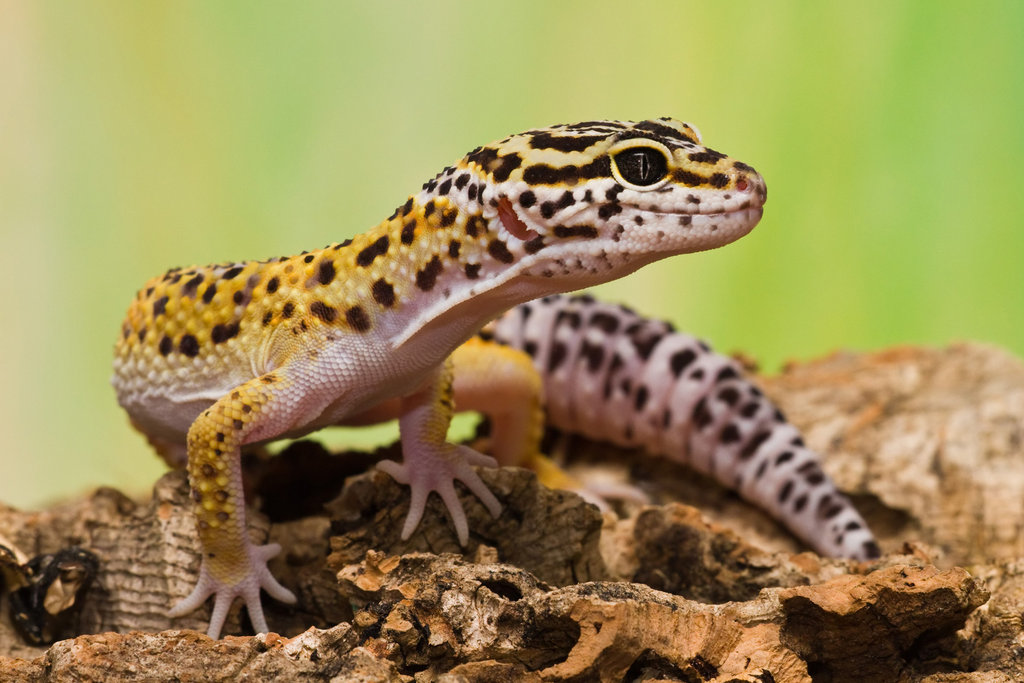
Leopard Gecko
Eublepharis macularius
A crepuscular, terrestrial eyelid gecko of arid South and Central Asian habitats, widely captive-bred for its moderate size, movable eyelids, fat-storing tail, and generally calm temperament.
Overview
The leopard gecko (Eublepharis macularius) is a ground-dwelling eyelid gecko from arid and semi-arid parts of Afghanistan, Pakistan, and northwest India, with related or uncertain records reported from neighboring regions. Unlike many geckos it has movable eyelids and clawed toes rather than sticky toe pads, so it cannot cling to smooth glass. Captive animals are almost entirely captive-bred and are among the most commonly kept pet lizards when heating, hides, insect nutrition, and hygiene are handled correctly.
Native Regions
Afghanistan, Pakistan, Northwest India
Habitats
Rocky arid scrub and dry grasslands, Semi-desert with clay, gravel, and sandy soils, Burrows and shaded rock crevices used by day
Adult Length
Usually about 7-10 inches total length; some males longer
Adult Weight
Typically about 45-80 grams; some adults heavier
Lifespan
10–20 years
For Beginners
A strong beginner candidate when the keeper can provide live insects, a thermostatically controlled gradient, a humid hide, and routine cleaning. It is not a low-effort pet: incorrect heat, missing calcium or UVB support, loose sand, or cohabitation problems are common failure points.
For Experienced Keepers
Experienced keepers can refine bioactive arid setups, measured UVB gradients, morph-specific lighting caution for light-sensitive eyes, and carefully managed breeding with temperature-dependent sex determination.
Key Points
- › Crepuscular to nocturnal terrestrial lizard with a fat-storing tail and movable eyelids.
- › Needs a measured heat gradient, low ambient humidity with a moist hide, and low-level UVB.
- › Best housed alone and fed a varied gut-loaded insect diet with calcium support.
Appearance & Behavior
Adults are typically about 7-10 inches long and often 45-80 grams, with a stout body, bumpy tuberculate skin, vertical pupils, movable eyelids, and a thick segmented tail used to store fat. Wild-type animals are usually yellow with dark spots; captive breeding has produced many morphs. Juveniles are often more banded. Males tend to be more robust with broader heads, a V-shaped row of enlarged preanal pores, and hemipenal bulges at the tail base.
Normal Behavior
Active mainly at dawn, dusk, and night. By day they usually rest in burrows, crevices, or hides. They may climb low rocks or décor, lick their eyes with the tongue, chirp when alarmed, and wave or vibrate the tail during hunting or social signaling. A plump, rounded tail indicates good energy reserves.
Social Behavior
These geckos live largely solitary lives in nature. Routine cohabitation is unnecessary and can cause fighting, stress, and injury, especially among adult males. Keep one gecko per enclosure except for brief, experienced breeding introductions.
Warning Signs
Sunken eyes, a thin or stick-like tail with weight loss, lethargy, tremors, soft or swollen jaws or limbs, retained shed on toes or eyes, chronic constipation or abnormal droppings, mouth lesions, discharge, open-mouth breathing, or persistent appetite loss require husbandry review and reptile-veterinary care.
Key Points
- › Terrestrial eyelid gecko that stores fat in the tail.
- › Mostly crepuscular or nocturnal and spends daylight hidden.
- › House singly outside supervised breeding.
Enclosure & Environment
Enclosure Size
Minimum about 36 x 18 x 18 inches for one adult. Smaller starter setups may be used briefly for juveniles, but adults need enough length for a meaningful warm-to-cool gradient and enrichment. Larger is better.
Enclosure Type
Well-ventilated glass, PVC, wooden, or fiberglass terrestrial vivarium with a secure lid or front doors and no escape gaps.
Substrate
Paper towel, newspaper, tile, slate, or reptile carpet are safest, especially for juveniles and quarantine. Healthy adults in well-managed setups may use carefully chosen soil/sand mixes or hard-setting clay substrates, but avoid calcium sand, walnut shell, corncob, aromatic wood chips, and feeding directly on loose particulate substrate. Impaction risk rises with incorrect heat, dehydration, or vitamin deficiencies.
Heating
Create a warm-end or basking zone around 88-90°F and a cool end around 73-75°F during the day, with overall daytime ambient values spanning roughly 73-80°F across the enclosure. Turn daytime basking lamps off at night and keep overnight temperatures from routinely falling below about 68°F, using guarded lightless heat if the room is colder. Confirm temperatures daily with digital thermometers.
Humidity
Keep ambient relative humidity about 30-40% with good ventilation. Always offer a humid hide with damp moss, vermiculite, or similar moisture-holding material so the gecko can shed safely without raising the whole enclosure.
Lighting
Provide a roughly 12-hour day and night cycle. Despite crepuscular habits, low-level UVB is recommended, with a gradient from a modest basking UVI near the warm end down to shade. Follow lamp manufacturer distance guidance, replace or meter bulbs on schedule, and seek veterinary advice for red-eyed or light-sensitive morphs. Turn lights off at night.
Décor & Enrichment
Provide multiple snug hides on warm and cool ends, a dedicated humid hide, low sturdy rocks or branches, and visual cover. Include a shallow water dish large enough for soaking without flooding the enclosure.
Cleaning & Maintenance
Spot-clean feces and soiled substrate promptly, refresh water daily, clean the humid hide regularly, and deep-clean the enclosure about monthly with a reptile-safe disinfectant, rinsing and drying thoroughly. Wash hands before and after contact because reptiles can carry Salmonella.
Key Points
- › Use at least 36 x 18 x 18 inches for an adult with a clear heat gradient.
- › Combine dry ambient air with a moist hide and low-level UVB.
- › Prefer non-loose or carefully managed substrate and guarded, thermostated heat.
Diet & Nutrition
Leopard geckos are insectivores. Offer a varied diet of appropriately sized live invertebrates rather than relying on a single feeder species.
Food Types
Staples include gut-loaded crickets, dubia or other feeder roaches, and locusts. Mealworms can be used in moderation. Soft-bodied feeders such as silkworms add variety. High-fat larvae such as waxworms are occasional treats only. Veterinary guidance generally advises against pinky mice because of obesity risk.
Feeding Schedule
Feed juveniles daily or every other day. Feed adults about two to three times weekly, adjusting portion size and frequency so the tail stays thick without obesity. Remove uneaten insects promptly so they do not harass the gecko.
Supplements
Dust most feeds with plain calcium carbonate and use a multivitamin or combined supplement less frequently per product and veterinary guidance. With a correctly set UVB system, high-D3 powders are usually needed less often. A small dish of plain calcium can remain available for self-selection.
Hydration
Provide a shallow dish of clean water at all times and refresh it daily. A humid hide supports shedding; occasional supervised soaking may help some individuals but is not a substitute for correct humidity and hydration.
Preparation
Gut-load feeder insects for at least 24 hours on a nutritious diet and hydrate them well. Offer prey no longer than the gecko's head, ideally in a feeding dish or separate container to reduce substrate ingestion.
Common Mistakes
Feeding oversized insects, using only fatty treats, skipping gut-loading or calcium, offering pinkies routinely, leaving live prey overnight, and feeding on loose sand are frequent errors.
Key Points
- › Varied gut-loaded insects are the staple diet.
- › Calcium support is essential; pinky mice are discouraged.
- › Match feeding frequency to age and body condition.
Handling
Many leopard geckos tolerate brief, calm handling once settled, which helps with health checks. Handling is a husbandry skill, not proof the animal enjoys contact.
Techniques
Gently scoop from below with both hands so the body and all four feet are supported. Keep sessions short, about 10-15 minutes depending on room temperature, so the gecko does not chill.
Do's & Don'ts
Never grab or lift by the tail; leopard geckos can drop the tail, which is stressful and depletes fat stores even though it may regenerate. Do not chase, squeeze, or handle immediately after feeding. Keep dogs, cats, and other pets away.
Taming
Allow several days to a week of minimal disturbance after arrival. Begin with short, infrequent sessions and build trust gradually. Some individuals remain less handleable than others.
Stress Signals
Backing away, open-mouth threat, biting, rapid fleeing, or frantic thrashing means stop and try another day. Excessive hiding after handling also indicates too much stress.
Key Points
- › Support the whole body; never restrain the tail.
- › Keep handling brief and optional.
- › Respect avoidance and defensive signals.
Health & Wellness
Common Health Issues
Metabolic bone disease
Description
A group of nutritional and husbandry-related disorders often linked to insufficient calcium, vitamin D3, or UVB exposure.
Symptoms
Tremors, soft or swollen jaws or limbs, lethargy, deformities, and fractures.
Prevention
Provide a correct heat gradient, low-level UVB, gut-loaded insects, and an evidence-based calcium and vitamin schedule.
Treatment
Contact a qualified exotic veterinarian promptly; do not attempt to diagnose or medicate at home.
Substrate impaction
Description
Digestive blockage from ingested loose substrate, often worsened by dehydration or incorrect temperatures.
Symptoms
Constipation, straining, reduced appetite, bloating, and lethargy.
Prevention
Use safer substrates for juveniles, avoid calcium sand and similar products, and feed in a dish or separate container.
Treatment
Seek reptile-veterinary care; mild home remedies are not a substitute for assessment of serious blockage.
Dysecdysis and toe loss
Description
Incomplete shedding, especially around toes and eye margins, associated with inadequate local humidity or dehydration.
Symptoms
Retained skin bands on digits or eyes, swelling, and later loss of toes if circulation is cut off.
Prevention
Maintain a properly moist humid hide, offer water, and avoid pulling stuck shed.
Treatment
Consult a reptile veterinarian if shed remains stuck; forced removal can tear new skin.
Parasites and gastrointestinal disease
Description
Internal parasites and gastroenteritis are common reasons for veterinary visits in new or group-housed reptiles.
Symptoms
Weight loss, abnormal or loose droppings, poor appetite, and lethargy.
Prevention
Quarantine new animals, keep enclosures clean, and arrange fecal checks with an exotic veterinarian.
Treatment
Diagnosis and medication must be directed by a qualified exotic veterinarian.
Preventative Care
Schedule wellness exams and fecal parasite checks for new geckos and at least annually thereafter. Quarantine newcomers, track weight and sheds, verify temperatures and humidity, and practice handwashing because reptiles can carry Salmonella.
Emergency Signs — seek vet care immediately
Severe weight loss, collapse, continuous tremors, inability to use limbs, stuck shed cutting into toes, egg binding with straining and distress, open-mouth breathing, significant bleeding, or prolonged refusal to eat with a thinning tail require urgent exotic veterinary care.
Key Points
- › Calcium, heat, UVB, and humidity mistakes drive many common illnesses.
- › Avoid risky loose substrates and cohabitation stress.
- › Use exotic veterinary care for diagnosis and treatment.
Breeding
Captive breeding is well established. Females usually lay two eggs per clutch and may produce multiple clutches in a season. Sex is strongly influenced by incubation temperature.
Preparation
Breed only healthy adults of adequate weight, typically near 18-24 months of age. Provide a moist lay box. Experienced keepers may use a cooler, shorter-day conditioning period before pairing. House only one adult male with females and never house adult males together.
Breeding Process
After mating, females bury eggs in damp substrate or a nest box. Remove eggs for incubation if breeding is intentional. Even unmated females may produce infertile eggs and still need a lay site to reduce egg-binding risk.
Egg Care
Incubate at controlled temperatures; roughly 79°F tends to produce mostly females, mid-80s°F more mixed sexes, and about 90°F mostly males, with very high temperatures again shifting toward females and reducing survival. Humidity in the incubator is typically kept high. Hatching often occurs in about 45-53 days.
Hatchling Care
Hatchlings live on yolk for the first days and usually begin feeding after the first shed. Offer tiny gut-loaded insects, correct temperatures, a humid hide, and solitary housing.
Key Points
- › Clutches are usually two eggs with temperature-dependent sex determination.
- › Provide a moist nest site even for non-breeding females that may lay infertile eggs.
- › Breeding requires experience, space, and veterinary support if problems arise.