
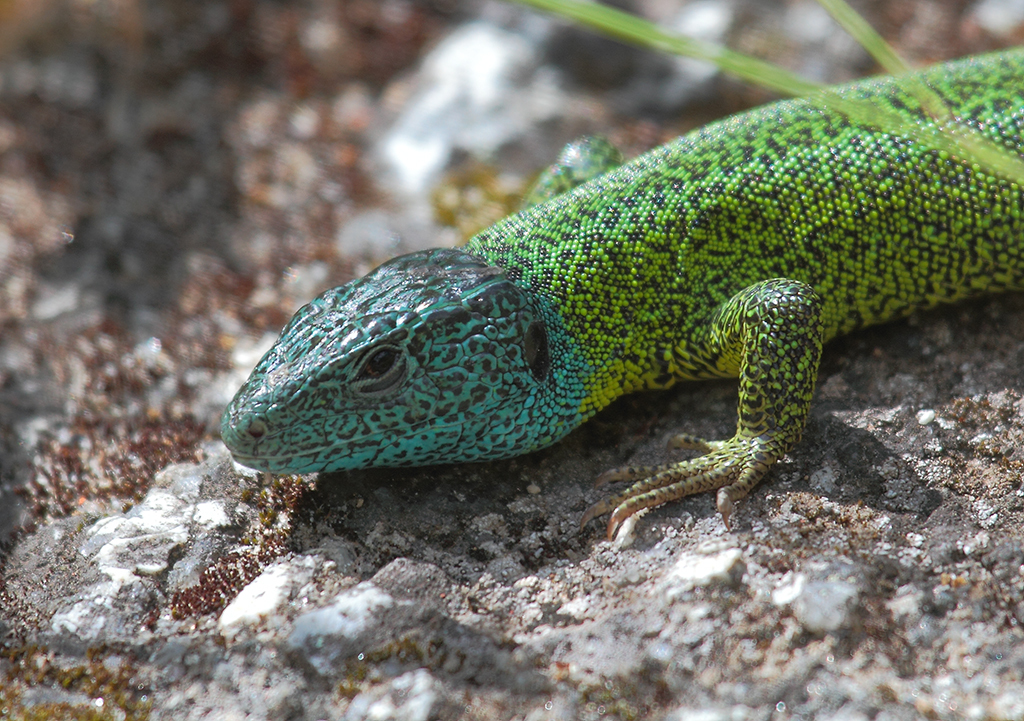
Iberian Emerald Lizard
Lacerta schreiberi
A striking green lizard native to the Iberian Peninsula, known for its vibrant coloration and preference for cool, humid habitats.
Last updated: 3/16/2025
Overview
A medium-sized, vividly colored lizard native to the Iberian Peninsula, known for its striking emerald hue and active behavior.
Native Regions
Iberian Peninsula
Habitats
Forests, Mountains
Adult Length
8-12 inches
Adult Weight
2-4 ounces
Lifespan
5–10 years
For Beginners
Not recommended due to specific care requirements
For Experienced Keepers
Suitable for experienced reptile keepers
Key Points
- › Arboreal and diurnal
- › Insectivorous diet
- › Requires spacious enclosure with climbing opportunities
Appearance & Behavior
Males exhibit bright green coloration with black markings, while females and juveniles are generally duller. Adults reach up to 13.5 cm (5.3 in) in snout-to-vent length, with a total length including the tail of about 38 cm (15 in).
Normal Behavior
Diurnal and active, these lizards are agile climbers and baskers. Males can be territorial, especially during the breeding season.
Social Behavior
Solitary; males are territorial and may exhibit aggression towards each other.
Warning Signs
Lethargy, loss of appetite, or dull coloration may indicate health issues.
Key Points
- › Active during the day
- › Requires ample climbing structures
Enclosure & Environment
Enclosure Size
Minimum 36 x 18 x 18 inches for a single adult.
Enclosure Type
Glass terrarium with a secure mesh top.
Substrate
Coconut fiber, cypress mulch, or a soil-sand mix.
Heating
Basking spot at 85-90°F; ambient temperature 75-80°F.
Humidity
Maintain around 60% with regular misting.
Lighting
Full-spectrum UVB lighting for 10-12 hours daily.
Décor & Enrichment
Sturdy branches, rocks, and plants to provide hiding spots and climbing opportunities.
Cleaning & Maintenance
Spot clean daily; deep clean the enclosure monthly.
Key Points
- › Requires a spacious, well-ventilated enclosure
- › Proper lighting and temperature gradients are essential
Diet & Nutrition
Primarily insectivorous, with occasional consumption of smaller lizards.
Food Types
Crickets, mealworms, roaches, and other appropriately sized insects.
Feeding Schedule
Offer food 3-4 times a week, allowing them to consume what they can within 10-15 minutes.
Supplements
Dust insects with calcium powder 2-3 times a week and multivitamins once a week.
Hydration
Provide a shallow water dish and mist the enclosure to maintain humidity.
Preparation
Gut-load insects 24 hours before feeding.
Common Mistakes
Offering prey that is too large; lack of dietary supplementation.
Key Points
- › Requires a varied diet of appropriately sized insects
- › Regular supplementation is crucial
Handling
Can become accustomed to handling with regular, gentle interaction.
Techniques
Support the body fully; approach calmly to avoid startling.
Do's & Don'ts
Avoid rough handling; do not restrain tightly.
Taming
Regular, gentle handling from a young age can increase tolerance.
Stress Signals
Attempting to flee, tail autotomy (dropping), or biting.
Key Points
- › Requires patience and consistency
- › Can be skittish if not handled properly
Health & Wellness
Common Health Issues
Metabolic Bone Disease (MBD)
Description
Caused by calcium deficiency or lack of UVB exposure.
Symptoms
Weakness, limb deformities, lethargy.
Prevention
Provide adequate UVB lighting and calcium supplementation.
Treatment
Consult a veterinarian; adjust diet and lighting.
Respiratory Infections
Description
Often due to low temperatures or high humidity.
Symptoms
Labored breathing, nasal discharge, lethargy.
Prevention
Maintain proper temperature and humidity levels.
Treatment
Seek veterinary care; adjust habitat conditions.
Preventative Care
Regular veterinary check-ups; proper diet and habitat maintenance.
Emergency Signs — seek vet care immediately
Severe lethargy, refusal to eat, open-mouth breathing.
Key Points
- › Proper husbandry prevents most health issues
- › Monitor health and behavior closely
Breeding
Egg-laying species (oviparous).
Preparation
Provide a nesting area with moist substrate for egg-laying females.
Breeding Process
Females can lay clutches of 11-28 eggs during the breeding season.
Egg Care
Incubate at 80-85°F with appropriate humidity.
Hatchling Care
Provide appropriately sized enclosures with proper diet and lighting.
Key Points
- › Breeding requires specific conditions
- › Clutch sizes vary