
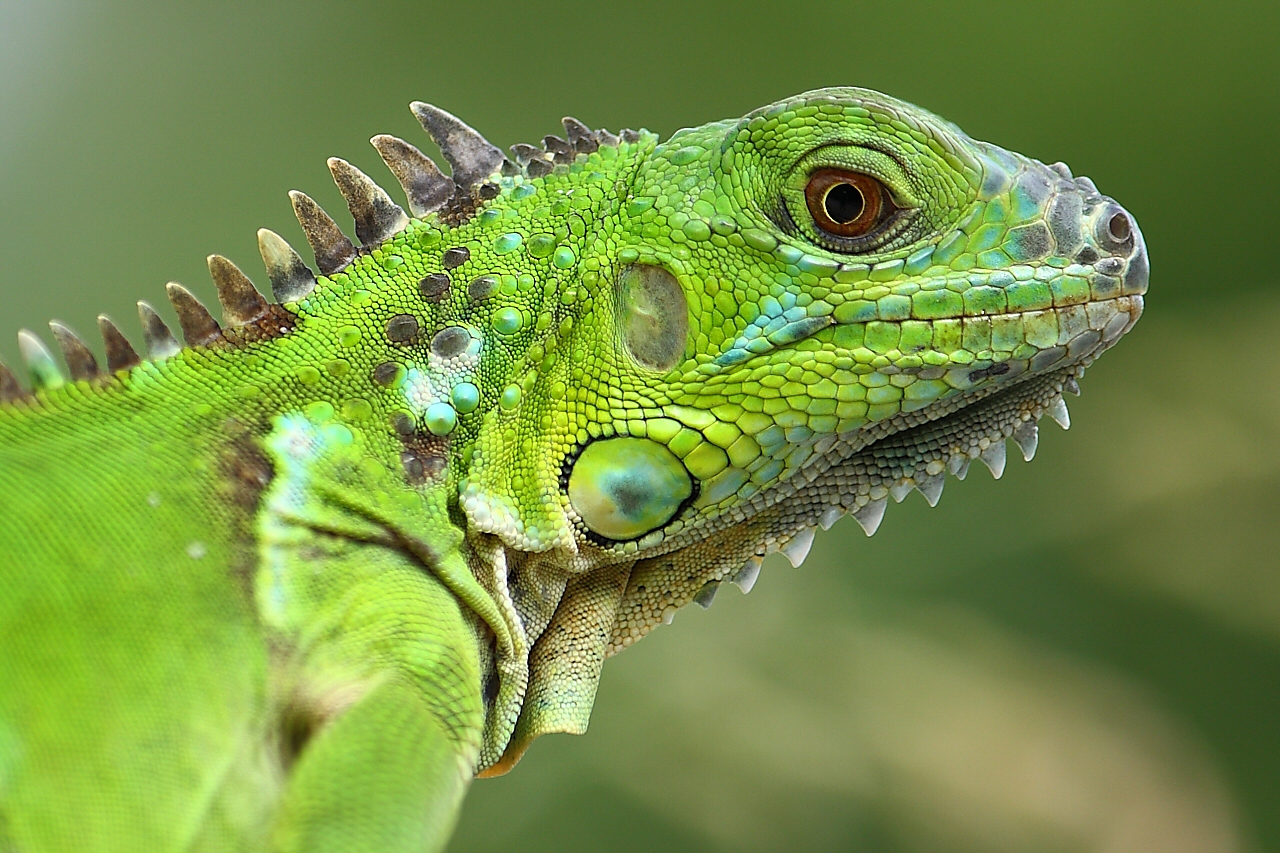
Green Iguana
Iguana iguana
A large, herbivorous lizard known for its striking green coloration and impressive size, native to Central and South America.
Last updated: 3/16/2025
Overview
A large, arboreal lizard native to Central and South America, known for its vibrant green color and impressive size, making it a popular yet challenging pet.
Native Regions
Central America, South America
Habitats
Rainforests
Adult Length
5-7 feet
Adult Weight
10-20 pounds
Lifespan
10–15 years
For Beginners
Not recommended due to size and care requirements
For Experienced Keepers
Suitable for experienced reptile keepers
Key Points
- › Arboreal and diurnal
- › Herbivorous diet
- › Requires large enclosure and specific care
Appearance & Behavior
Robust body with a long tail, dewlap under the chin, and a row of spines along the back; color ranges from bright green to bluish hues.
Normal Behavior
Diurnal, enjoys climbing and basking; can be territorial, especially males.
Social Behavior
Solitary; males can be aggressive towards each other.
Warning Signs
Lethargy, lack of appetite, dark or dull coloration.
Key Points
- › Active during the day
- › Requires ample climbing opportunities
Enclosure & Environment
Enclosure Size
Minimum 12 feet long, 6 feet wide, and 8 feet tall.
Enclosure Type
Custom-built or modified room-sized habitat.
Substrate
Coconut fiber, cypress mulch, or reptile-safe soil.
Heating
Basking spot at 95-100°F; ambient temperature 75-85°F.
Humidity
Maintain 60-70% with regular misting.
Lighting
UVB lighting required for 10-12 hours daily.
Décor & Enrichment
Sturdy branches, shelves, platforms for climbing and basking.
Cleaning & Maintenance
Spot clean daily; deep clean monthly.
Key Points
- › Requires a spacious, tall enclosure
- › Proper lighting and humidity are essential
Diet & Nutrition
Strictly herbivorous diet.
Food Types
Leafy greens (collard, mustard, dandelion), vegetables (squash, bell peppers), occasional fruits.
Feeding Schedule
Feed daily, providing a variety of fresh vegetables and greens.
Supplements
Calcium powder 2-3 times a week; multivitamins once a week.
Hydration
Provide a large water dish for drinking and soaking; mist food to increase water intake.
Preparation
Chop food into appropriate sizes; avoid toxic plants.
Common Mistakes
Feeding animal protein; lack of dietary variety.
Key Points
- › Requires a varied plant-based diet
- › Avoid feeding animal protein
Handling
Can become accustomed to handling with regular, gentle interaction.
Techniques
Support the body fully; approach calmly to avoid startling.
Do's & Don'ts
Do not grab by the tail; avoid rough handling.
Taming
Regular, gentle handling from a young age can increase tolerance.
Stress Signals
Tail whipping, hissing, attempting to flee.
Key Points
- › Requires patience and consistency
- › Can be defensive if not handled properly
Health & Wellness
Common Health Issues
Metabolic Bone Disease (MBD)
Description
Caused by calcium deficiency or lack of UVB exposure.
Symptoms
Weakness, limb deformities, lethargy.
Prevention
Provide adequate UVB lighting and calcium supplementation.
Treatment
Consult a veterinarian; adjust diet and lighting.
Respiratory Infections
Description
Often due to low temperatures or high humidity.
Symptoms
Labored breathing, nasal discharge, lethargy.
Prevention
Maintain proper temperature and humidity levels.
Treatment
Seek veterinary care; adjust habitat conditions.
Preventative Care
Regular veterinary check-ups; proper diet and habitat maintenance.
Emergency Signs — seek vet care immediately
Severe lethargy, refusal to eat, open-mouth breathing.
Key Points
- › Proper husbandry prevents most health issues
- › Monitor health and behavior closely
Breeding
Egg-laying species (oviparous).
Preparation
Provide a nesting area with moist substrate for egg-laying females.
Breeding Process
Females can lay clutches of 20-70 eggs during breeding season.
Egg Care
Incubate at 85-90°F with high humidity.
Hatchling Care
Provide appropriately sized enclosures with proper diet and lighting.
Key Points
- › Breeding requires significant space and resources
- › Large clutch sizes are common