
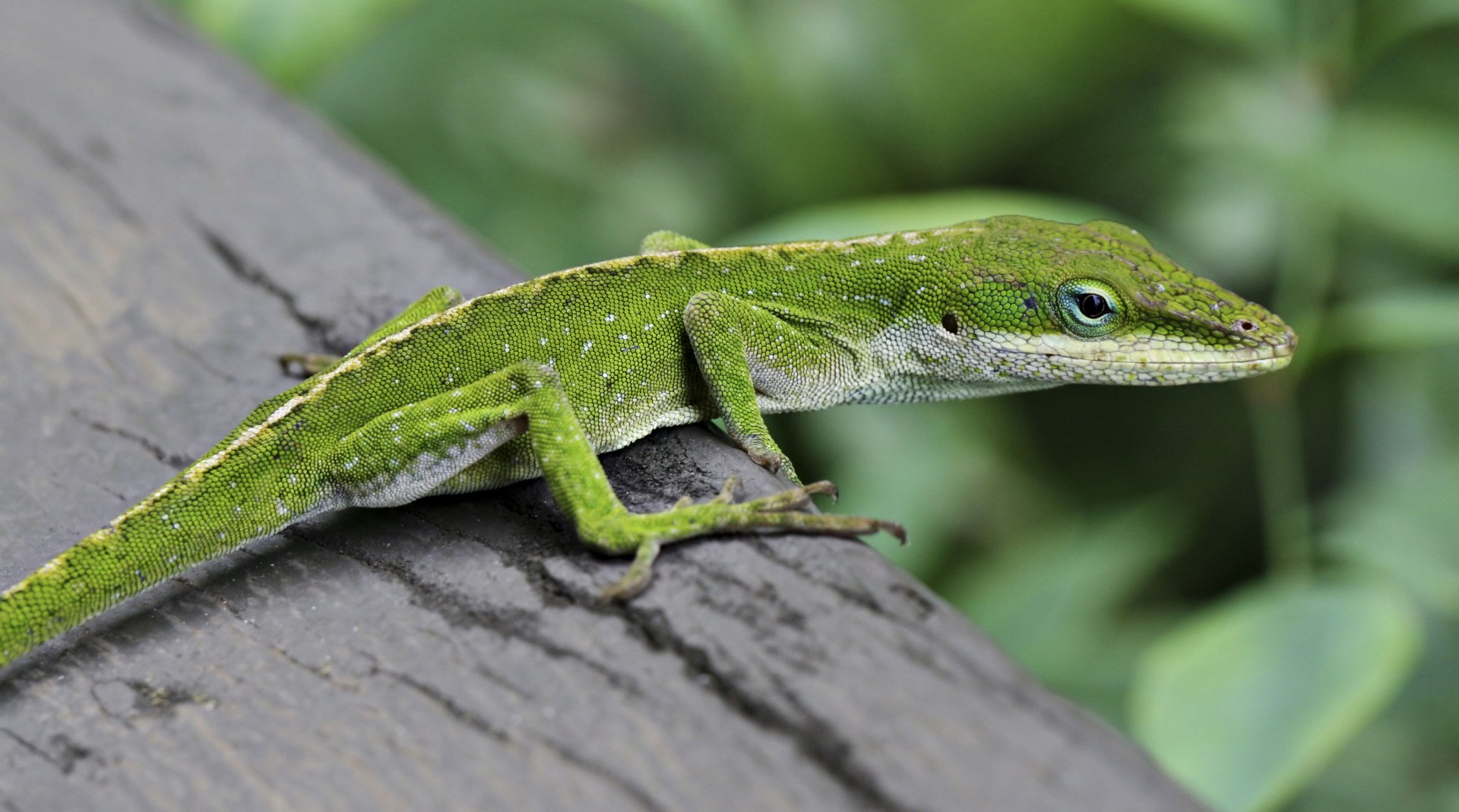
Green Anole Lizard
Anolis carolinensis
A small, arboreal lizard known for its ability to change color and its active nature, native to the southeastern United States.
Last updated: 3/16/2025
Overview
A small, arboreal lizard native to the southeastern United States, known for its ability to change color between green and brown and its active nature.
Native Regions
United States
Habitats
Forests
Adult Length
5-8 inches
Adult Weight
0.2-0.3 ounces
Lifespan
5–8 years
For Beginners
Recommended with proper research
For Experienced Keepers
Suitable for all experience levels
Key Points
- › Arboreal and diurnal
- › Can change color based on mood and environment
- › Requires UVB lighting
Appearance & Behavior
Slender body with a pointed snout, long tail, and adhesive toe pads; males have a pinkish-red dewlap.
Normal Behavior
Diurnal, active climbers, males display territorial behaviors.
Social Behavior
Males are territorial; best housed singly or in groups with only one male.
Warning Signs
Lethargy, lack of appetite, dull coloration.
Key Points
- › Active during the day
- › Males can be aggressive towards each other
Enclosure & Environment
Enclosure Size
Minimum 10-gallon tank for one or two anoles; taller enclosures preferred.
Enclosure Type
Glass terrarium with a secure screen top.
Substrate
Coconut fiber, peat moss, or reptile-safe soil.
Heating
Basking spot at 85-90°F; ambient temperature 75-80°F.
Humidity
Maintain 60-70% with regular misting.
Lighting
UVB lighting required for 10-12 hours daily.
Décor & Enrichment
Branches, vines, plants for climbing and hiding.
Cleaning & Maintenance
Spot clean daily; full substrate change monthly.
Key Points
- › Vertical space is essential
- › Requires UVB lighting and proper humidity
Diet & Nutrition
Insectivorous diet.
Food Types
Crickets, small roaches, fruit flies, mealworms (occasionally).
Feeding Schedule
Feed daily, offering an amount they can consume in a few minutes.
Supplements
Dust insects with calcium powder 2-3 times a week and multivitamins once a week.
Hydration
Mist enclosure daily; provide a shallow water dish.
Preparation
Gut-load insects 24 hours before feeding.
Common Mistakes
Offering prey that is too large; lack of dietary supplementation.
Key Points
- › Requires live, appropriately sized insects
- › Regular supplementation is crucial
Handling
Generally skittish and prefers minimal handling.
Techniques
Gently coax onto hand; avoid grabbing.
Do's & Don'ts
Do not handle frequently; avoid restraining tightly.
Taming
May become accustomed to presence but rarely enjoys handling.
Stress Signals
Dark coloration, rapid movements, attempting to flee.
Key Points
- › Not ideal for frequent handling
- › Observe more than interact
Health & Wellness
Common Health Issues
Metabolic Bone Disease (MBD)
Description
Caused by calcium deficiency or lack of UVB exposure.
Symptoms
Weakness, deformities, tremors.
Prevention
Provide UVB lighting and calcium supplementation.
Treatment
Consult a veterinarian; adjust diet and lighting.
Respiratory Infections
Description
Often due to low temperatures or high humidity.
Symptoms
Lethargy, wheezing, mucus around nostrils.
Prevention
Maintain proper temperature and humidity levels.
Treatment
Seek veterinary care; adjust habitat conditions.
Preventative Care
Regular habitat maintenance; proper diet and lighting.
Emergency Signs — seek vet care immediately
Severe lethargy, refusal to eat, open-mouth breathing.
Key Points
- › Proper husbandry prevents most health issues
- › Monitor behavior and appearance regularly
Breeding
Egg-laying species (oviparous).
Preparation
Provide a laying box with moist substrate.
Breeding Process
Females lay single or paired eggs multiple times during breeding season.
Egg Care
Incubate at 80-85°F with moderate humidity.
Hatchling Care
House separately; feed pinhead crickets and fruit flies.
Key Points
- › Breeding is straightforward
- › Eggs hatch in 5-7 weeks