
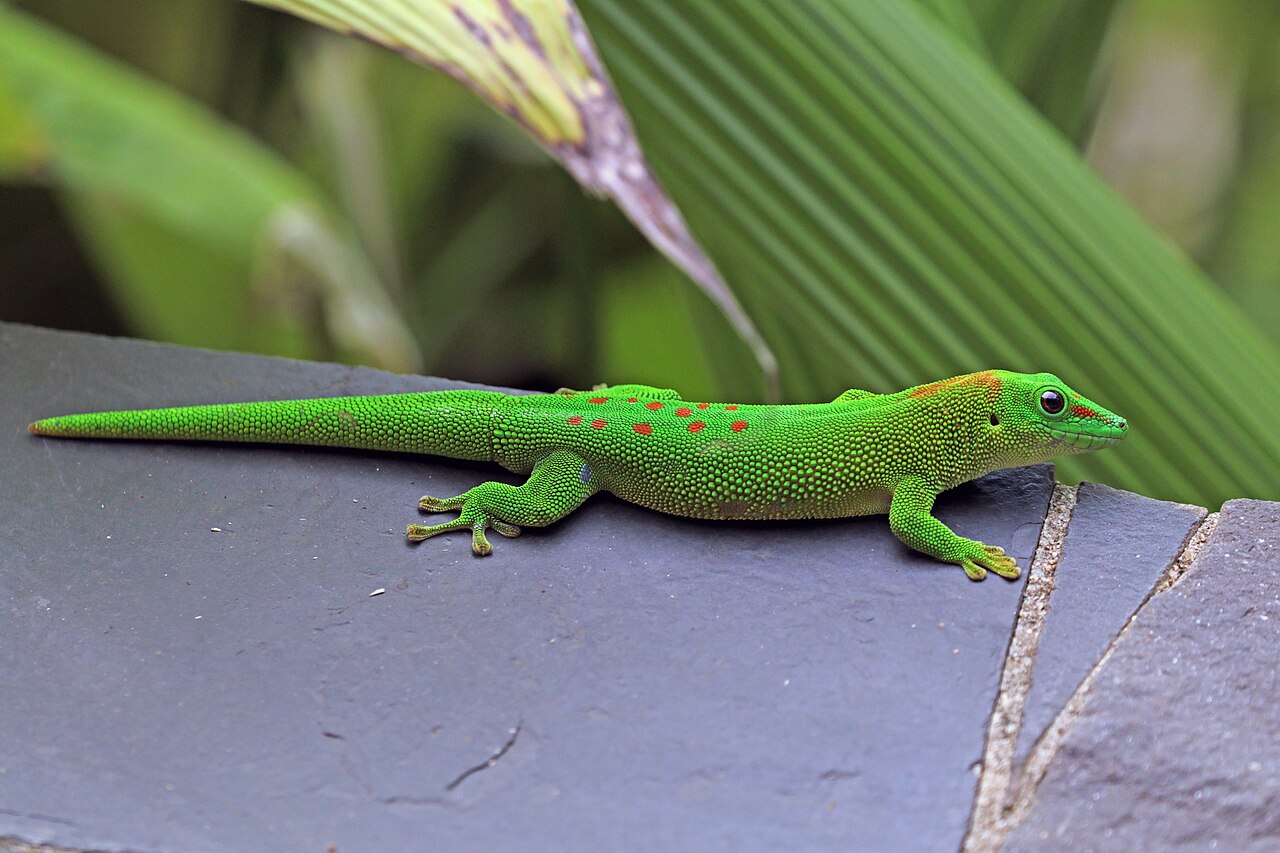
Giant Day Gecko
Phelsuma grandis
A large, bright green, diurnal arboreal gecko from northern Madagascar, best kept as a display animal with strong lighting, UVB, height, and careful hydration.
Overview
Phelsuma grandis is a large day gecko native to northern Madagascar. It is bright green with a red stripe from nostril to eye, adhesive toe pads, and strongly diurnal, arboreal habits. Captive success depends on height, bright light, UVB, a defined warm perch, misting with a drying cycle, and a mixed insect-plus-prepared-diet feeding plan.
Native Regions
Northern Madagascar, Northwestern Madagascar (including the Sambirano region), Nosy Be and nearby northern islands such as Nosy Komba
Habitats
Tropical and subtropical forest canopy and vegetation, Degraded forest and secondary growth, Orchards, plantations, and other cultivated woody habitat, Human-modified areas with trees, bamboo, and buildings
Adult Length
Usually about 9-12 inches (23-30 cm) total length; maximum about 300 mm (11.8 inches) reported
Adult Weight
Typical adult mass is poorly documented; hatchlings about 0.9 g, and length-based upper estimates near 45-50 g rather than weighed population means
Lifespan
10–15 years
For Beginners
Not a beginner pet. New keepers must already manage tall secure enclosures, measured UVB, heat gradients, humidity cycles, escape prevention, and low-stress transfers before acquiring one.
For Experienced Keepers
Experienced keepers can refine bioactive planting, Solarmeter-verified UV gradients, breeding management with calcium support for females, and careful solitary or supervised pair housing.
Key Points
- › Diurnal display gecko that thrives with tall, planted housing and strong lighting
- › Needs UVB, a warm basking branch, and regular droplet hydration
- › Delicate skin and high speed make routine handling a poor fit
Appearance & Behavior
Adults are among the largest Phelsuma, commonly about 9-12 inches total length, with females usually smaller than males. The body is bright green or occasionally bluish green, with a consistent red line from nostril to eye and variable red dorsal markings. Sticky toe pads allow climbing on glass and mesh. Females may show chalky endolymphatic calcium sacs on the neck during reproduction. Skin is soft and easily torn.
Normal Behavior
Active by day: climbing, basking on elevated perches, hunting insects, licking nectar-style foods, and retreating into foliage. Animals may darken when stressed. They cling upside-down on mesh and jump suddenly, so doors and gaps must stay secure.
Social Behavior
Territorial. Routine solitary housing is the lower-risk default. Adult males should not share an enclosure. Breeding pairs or female groups require oversized space, visual barriers, and immediate separation if chasing, bite marks, floor-hiding, or unequal access to heat and food appear.
Warning Signs
Sunken eyes, stuck shed especially on toes, weak grip, jaw or limb deformities, tremors, persistent dark stress color, reduced appetite, open-mouth breathing, discharge, unexplained wounds, or inability to climb normally.
Key Points
- › Bright green arboreal gecko with variable red markings
- › Day-active climber that uses height, foliage, and basking branches
- › Best housed alone outside carefully managed breeding setups
Enclosure & Environment
Enclosure Size
Minimum for one adult: 24 x 24 x 48 inches (60 x 60 x 120 cm). Larger is preferred. Smaller footprints such as 18 x 18 x 36 inches are better treated as temporary or juvenile housing.
Enclosure Type
Vertical glass, PVC, or similar front-opening terrarium with fine-gap security, strong ventilation, and heat or UV fixtures kept out of direct animal contact.
Substrate
Use a moisture-retentive tropical mix such as coconut fiber, topsoil blends, or bioactive soil with drainage. Keep substrate only a few inches deep unless planting heavily. Avoid loose substrate for very small hatchlings when ingestion risk is a concern; paper towel is useful in quarantine.
Heating
Create a basking surface of about 85-90°F at an upper branch, daytime ambient around 75-82°F through mid and lower levels, and nights about 70-75°F. Use a white daytime heat lamp on a thermostat or dimmer as needed, measure the branch with an infrared thermometer, and keep cooler shaded options available.
Humidity
Target roughly 50-70% average humidity with morning and evening misting, higher readings after misting, and good drying between cycles. Constant stagnant wetness is undesirable; airflow matters as much as peak humidity.
Lighting
Provide 11-13 hours of bright visible light plus measured low-to-moderate UVB, roughly Ferguson Zone 2. Aim for about UVI 1-4 at the highest routinely used basking perch depending on which specialist guide is followed, with shade down to near zero elsewhere. Replace UVB lamps on schedule and verify placement with a Solarmeter when possible.
Décor & Enrichment
Fill the enclosure with bamboo, cork hollows, vines, branches at multiple heights, and dense live plants such as pothos, philodendron, or similar safe tropical species. Include open illuminated basking routes plus visual cover and broad leaves for drinking.
Cleaning & Maintenance
Spot-clean feces and urates daily, refresh water and remove uneaten prepared diet before it ferments, and deep-clean or refresh substrate on a schedule suited to bioactive versus sterile setups. Rinse disinfectants thoroughly.
Key Points
- › Prioritize usable height over floor area alone
- › Pair bright light and UVB with a warm upper perch and deep shade
- › Mist for drinking droplets, then allow the enclosure to dry
Diet & Nutrition
Giant day geckos are omnivores. In nature they take invertebrates, nectar, fruit juices, and occasionally tiny vertebrates. In captivity, a complete fruit-gecko or day-gecko diet plus varied gut-loaded insects is the practical staple.
Food Types
Staples are appropriately sized crickets and roaches plus complete prepared gecko diet. Secondary insects include silkworms, hornworms, and legal locusts. Do not rely on baby food, honey, or plain fruit as the main diet.
Feeding Schedule
Young animals need frequent insects and regular prepared diet. Adults usually do well with insects a few times weekly and prepared diet about once to a few times weekly. Adjust portions to measured body condition rather than continuous free choice.
Supplements
Dust insects lightly with calcium matched to UVB output. Multivitamins and D3 products should follow labels and must not stack carelessly with fortified gecko diets. Reproductive females need especially careful calcium support because eggshell production draws heavily on stored calcium.
Hydration
Most drinking comes from misted droplets on leaves and decor. Provide a shallow clean water dish as backup and refresh it regularly.
Preparation
Gut-load insects before feeding. Offer insects and diet cups on elevated ledges, never as the only option on the floor. Mix prepared diet fresh, offer a small amount, and discard leftovers before mold develops.
Common Mistakes
Using fruit or honey alone, skipping UVB while also under-supplementing calcium, leaving prepared diet to spoil, overfeeding sweet diets to obesity, or housing animals so competition hides unequal feeding.
Key Points
- › Combine complete gecko diet with varied gut-loaded insects
- › Feed from elevated ledges and remove leftovers promptly
- › Coordinate calcium and vitamins with measured UVB
Handling
Treat this species as a display animal. Skin tears easily, animals are extremely fast, and they can drop their tails when restrained.
Techniques
Prefer hand-feeding insects or offering prepared diet on a finger or ledge. For necessary moves, coax the gecko into a container, cork tube, or similar transfer tool inside a sealed room.
Do's & Don'ts
Never grab the gecko or lift it by the tail. Avoid chasing it around the enclosure. Wait at least two weeks after arrival before any optional interaction, and wash hands before and after contact with food or furnishings.
Taming
Trust, if it develops at all, comes from predictable routines and voluntary approach to food rather than forced handling sessions.
Stress Signals
Stop interaction if the animal repeatedly flees, darkens, vocalizes distress, loses grip, sheds skin fragments, or threatens to jump from an unsafe height.
Key Points
- › Observation and enrichment beat routine handling
- › Use containers for transfers instead of grabbing
- › Protect delicate skin and the autotomous tail
Health & Wellness
Common Health Issues
Metabolic bone disease and calcium imbalance
Description
Inadequate calcium, vitamin D3 pathways, UVB, or nutrition can weaken bone and muscle function.
Symptoms
Soft or swollen jaw, tremors, weak grip, deformed limbs, lethargy, or poor appetite.
Prevention
Provide measured UVB with shade, gut-loaded insects, balanced prepared diet, and calcium support matched to life stage.
Treatment
Contact a qualified exotic veterinarian promptly; do not attempt diagnosis or medication at home.
Dehydration and retained shed
Description
Insufficient misting, chronically low humidity, or poor hydration can impair shedding and health.
Symptoms
Sunken eyes, stuck shed on toes or body, dull skin, reduced activity.
Prevention
Mist on a schedule that creates drinking droplets and a daily drying cycle; maintain ventilation and offer a water dish.
Treatment
Correct husbandry immediately and seek reptile-veterinary care if shed remains stuck, especially around toes, or if the animal stays weak.
Skin injury and tail loss
Description
Rough handling, enclosure hazards, or panic can tear delicate skin or cause autotomy.
Symptoms
Torn skin, bleeding, missing or regenerating tail, open wounds.
Prevention
Minimize grabbing, use container transfers, secure decor, and keep heat lamps out of reach of mesh-hanging animals.
Treatment
Have wounds assessed by a qualified exotic veterinarian; supportive hygiene only under veterinary guidance.
Reproductive complications including dystocia
Description
Egg-laying females under calcium or husbandry stress may retain eggs or become exhausted.
Symptoms
Persistent straining, abnormal swelling, weakness, appetite loss, or prolonged unsuccessful nesting behavior.
Prevention
Maintain excellent calcium and UVB, provide nesting sites, and avoid forcing repeated breeding.
Treatment
Seek urgent care from a reptile veterinarian; imaging and treatment decisions belong to a clinician.
Preventative Care
Quarantine new animals, weigh and watch appetite and stools, verify temperatures and UVB regularly, keep misting and cleaning consistent, and schedule veterinary checks with a clinician experienced in reptiles.
Emergency Signs — seek vet care immediately
Open-mouth breathing, discharge, collapse, seizures or tremors, inability to climb or right, severe wounds, prolonged egg straining, or rapid deterioration requires prompt exotic-veterinary care.
Key Points
- › Most problems track lighting, calcium, hydration, or handling injuries
- › Reproductive females need extra nutritional monitoring
- › Illness and emergencies belong with a qualified exotic veterinarian
Breeding
Phelsuma grandis is oviparous and can breed readily in captivity. Females typically glue two eggs together in bamboo, cork tubes, nest boxes, or on solid surfaces. The species shows temperature-dependent sex determination.
Preparation
Breed only mature, well-conditioned animals with separate permanent housing ready. Confirm sex carefully, plan calcium and UVB support for the female, and prepare incubation and hatchling setups before pairing.
Breeding Process
Introduce pairs only under close supervision. Provide enclosed laying sites. Separate animals if aggression or unequal resource access appears. Females may produce multiple clutches in a season.
Egg Care
Clutches are usually two adhered eggs. If firmly attached, incubating in place may be safer than forcing removal. Captive incubation commonly uses warm, humid, ventilated conditions without sitting eggs in wet media; published and hobby ranges often fall near the upper 70s to low 80s °F for multi-week development, with sex ratios shifting by temperature.
Hatchling Care
Hatchlings are independent and feed mainly on small insects. Rear them in secure vertical setups with fine gaps, dense cover, correct temperatures, misting, and carefully sized prey. Move them into adult-scale housing as they grow.
Key Points
- › Expect two-egg clutches and possible repeated laying
- › Support reproductive females with calcium, UVB, and nesting sites
- › Incubation temperature influences hatchling sex