
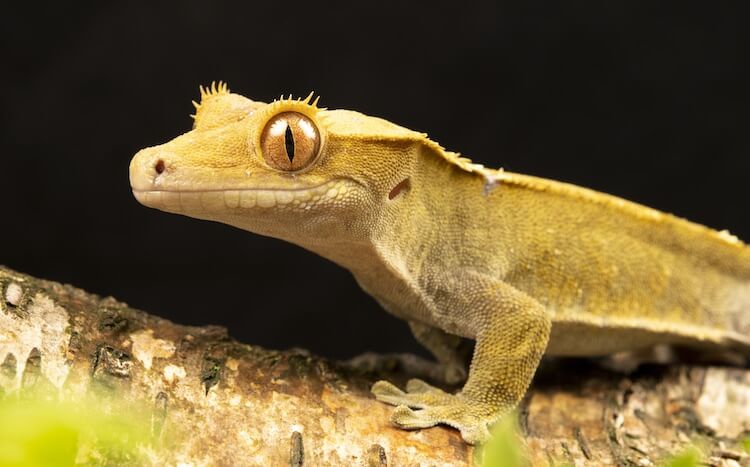
Crested Gecko
Correlophus ciliatus
A small, arboreal lizard known for its distinctive crest of skin along its head and back, native to New Caledonia.
Overview
A medium-sized, arboreal gecko from New Caledonia, known for its unique eyelashes, sticky toe pads, and prehensile tail.
Native Regions
New Caledonia
Habitats
Rainforests
Adult Length
6-10 inches
Adult Weight
35-55 grams
Lifespan
10–20 years
For Beginners
Highly recommended
For Experienced Keepers
Suitable for all experience levels
Key Points
- › Arboreal and nocturnal
- › Does not require live food
- › Can regenerate energy but not its tail
Appearance & Behavior
Slender body with fringed crests above eyes and along the back, prehensile tail, and sticky toe pads
Normal Behavior
Nocturnal, enjoys climbing, can jump between branches
Social Behavior
Best housed alone, but females can cohabitate
Warning Signs
Lethargy, sunken eyes, rapid weight loss
Key Points
- › Arboreal and excellent climbers
- › Can drop tail permanently if stressed
Enclosure & Environment
Enclosure Size
Minimum 18x18x24 inches
Enclosure Type
Glass terrarium
Substrate
Coconut fiber, moss, or bioactive soil
Heating
72-78°F, no direct heat needed
Humidity
Maintain 50-80% with misting
Lighting
Low-level UVB beneficial but not required
Décor & Enrichment
Branches, cork bark, live or fake plants
Cleaning & Maintenance
Spot clean daily, deep clean monthly
Key Points
- › Requires a vertical setup
- › Humidity is essential
Diet & Nutrition
Primarily frugivorous but also eats insects
Food Types
Crested gecko diet (CGD), occasional crickets or roaches
Feeding Schedule
CGD every other day, insects once a week
Supplements
Occasional calcium with D3 if feeding insects
Hydration
Mist enclosure to provide drinking water
Preparation
Mix powdered CGD with water
Common Mistakes
Feeding too many insects or improper CGD mix
Key Points
- › Can thrive on powdered diet alone
- › Avoid overfeeding insects
Handling
Generally tolerates handling but prefers minimal interaction
Techniques
Support body, allow them to jump between hands
Do's & Don'ts
Do not grab tail, avoid excessive handling
Taming
Becomes more tolerant with gentle handling
Stress Signals
Gaping mouth, tail dropping, hiding excessively
Key Points
- › Handle gently and briefly
- › Tail does not regrow if lost
Health & Wellness
Common Health Issues
Metabolic Bone Disease (MBD)
Description
Lack of calcium or vitamin D3
Symptoms
Weak limbs, deformities
Prevention
Balanced diet with proper supplementation
Treatment
Vet care and calcium supplementation
Shedding Issues
Description
Difficulty shedding due to low humidity
Symptoms
Retained skin, especially on toes
Prevention
Mist enclosure regularly
Treatment
Soak affected areas gently
Preventative Care
Stable humidity and proper diet
Emergency Signs — seek vet care immediately
Rapid weight loss, refusal to eat for long periods
Key Points
- › Proper humidity prevents shedding issues
- › Balanced diet is essential
Breeding
Egg-laying species (oviparous)
Preparation
Provide a humid lay box with moss or soil
Breeding Process
Females lay 2 eggs every 30-45 days during breeding season
Egg Care
Incubate at 72-78°F with stable humidity
Hatchling Care
Provide small enclosures with proper humidity
Key Points
- › Prolific breeders
- › Eggs hatch in 60-90 days