
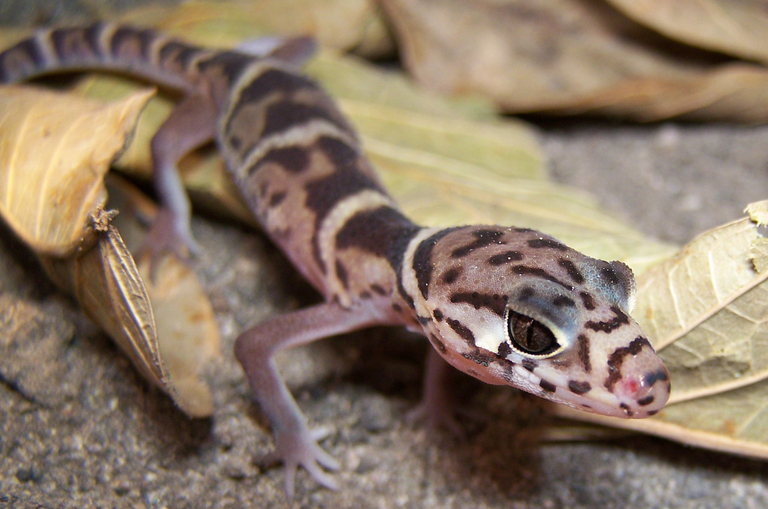
Central American Banded Gecko
Coleonyx mitratus
A small, nocturnal eyelid gecko from Central American dry forests that needs a terrestrial heat gradient, a humid hide, varied insects, and minimal handling.
Overview
Coleonyx mitratus is a moderately sized eyelid gecko native to Central America. Like other eublepharids, it has movable eyelids and lacks sticky toe pads. It is mostly crepuscular to nocturnal, spending daylight hours in burrows, leaf litter, or rock cover and emerging to hunt insects. Captive-bred animals can be hardy when temperature, humidity microclimates, and feeding are consistent, but this is primarily a display species rather than a handling pet.
Native Regions
Guatemala, El Salvador, Honduras, Nicaragua, Costa Rica
Habitats
Forest floor and leaf litter, Tropical and subtropical forest, Seasonal dry forest and woodland edges, Rock piles and soil burrows
Adult Length
Typically about 4-7 inches (10-18 centimeters) total length; maximum reports near about 7.5 inches (19 centimeters)
Adult Weight
Not reliably published in the selected sources
Lifespan
8–15 years
For Beginners
Some sellers market this gecko as beginner-friendly, but this record treats it as intermediate. Keepers must maintain a measured heat gradient, a dry surface with a reliable humid hide, insect variety and supplementation, and restraint about handling. Stuck shed on toes and chronic humidity mistakes are common pitfalls.
For Experienced Keepers
Experienced keepers can refine low-level UVB with shaded retreats, bioactive or deep naturalistic substrate, seasonal photoperiod, quarantine, and ethical breeding while monitoring body condition and preventing repeated clutch pressure on females.
Key Points
- › Provide a secure terrestrial enclosure with warm, cool, and humid hides.
- › Feed a varied insect diet with measured calcium and vitamin supplementation.
- › Minimize handling; these geckos are stress-sensitive and can drop their tails.
Appearance & Behavior
Adults are slender terrestrial geckos, typically about 4-7 inches in total length, with a tapered head, large eyes, movable eyelids, granular skin with scattered tubercles, slender limbs, and an unsegmented fat-storing tail. The usual pattern is brown with cream to yellow bands or dark markings and a pale underside. Males usually show hemipenal bulges at the tail base and femoral pores between the hind limbs.
Normal Behavior
These geckos hide through much of the day and become more active at dusk and night. They forage for insects, use multiple secure retreats, and move through cover rather than across open floor. A full tail is a normal fat reserve; regenerated tails often look different from original tails.
Social Behavior
Routine solitary housing is recommended. Males are territorial and should never share an enclosure. Same-sex female pairs or male-female groups are sometimes kept in larger setups, but cohabitation increases stress, feeding competition, injury risk, and unwanted breeding pressure. Prefer one gecko per enclosure unless an experienced keeper is intentionally managing breeding.
Warning Signs
Persistent weight loss or a thin tail, repeated food refusal, incomplete sheds especially on toes or the tail tip, swelling, wounds, wheezing, mouth lesions, abnormal droppings, lethargy outside normal daytime hiding, or continuous exposure in a bare enclosure are not normal and need husbandry review plus reptile-veterinary advice.
Key Points
- › A small nocturnal eyelid gecko with banded or spotted patterning.
- › Hides by day and hunts insects at night.
- › Best kept singly; never house males together.
Enclosure & Environment
Enclosure Size
Modern care guidance treats a 20-gallon long footprint, about 30 by 12 by 12 inches, as a practical adult minimum for one gecko. Larger footprints such as 36 by 18 by 18 inches are easier to stabilize and preferred. Older 10-gallon recommendations are too small for good adult care.
Enclosure Type
A front-opening or securely screened terrestrial terrarium works well. Prioritize footprint over height; these geckos climb modestly but live mainly on and under the ground surface.
Substrate
Use a soil-based mix that holds some moisture at depth while staying dry on top, such as coco fiber blends, soil mixes, or arid bioactive substrates about 2-4 inches deep. Leaf litter improves cover and humidity buffering. Avoid fine dry sand as the only substrate.
Heating
Create a warm hide of about 86-92°F with cooler ambient space around 75-80°F and night lows about 65-72°F. Overhead halogen or similar thermostat-controlled heat is preferred; undertank heat alone is a weaker substitute. Measure warm-hide surfaces and cool-side ambient temperatures separately.
Humidity
Target roughly 45-65% ambient humidity with a dry surface layer, good ventilation, and a consistently usable humid hide. Light evening misting can help as long as the enclosure does not stay continuously wet. Sources disagree on ambient humidity targets, so prioritize a humidity gradient and clean sheds over chasing a single room-wide number.
Lighting
Provide a consistent about 10-12 hour photoperiod. Low-level UVB over part of the enclosure is recommended for calcium metabolism and natural behavior even though the species is nocturnal; leave shaded hides so the gecko can self-regulate. Replace UVB bulbs on the manufacturer schedule and do not place UVB behind glass or plastic.
Décor & Enrichment
Provide a warm hide, a cool hide, and a humid hide lined with moist but not soggy moss or substrate. Add cork flats or tubes, low branches or ledges, rocks for nail wear, and live or artificial cover plants. A shallow water dish should always be available.
Cleaning & Maintenance
Spot-clean feces and soiled substrate daily. Refresh or replace loose substrate on a regular schedule, clean the water dish daily, and deep-clean hardscape as needed with reptile-safe disinfection. In bioactive setups, monitor for mold, sour substrate, and pest overgrowth.
Key Points
- › Adult minimum about 30x12x12 inches; larger is better.
- › Warm, cool, and humid hides are essential.
- › Low-level UVB with shade and a measured heat gradient are recommended.
Diet & Nutrition
This species is insectivorous. Variety, prey sizing, gut-loading, and supplementation matter more than any single feeder insect.
Food Types
Staples include appropriately sized crickets, small roaches, and black soldier fly larvae. Soft-bodied insects such as silkworms can rotate through the diet. Occasional waxworms or similar fatty larvae are treats only. Avoid oversized prey; Bio Dude specifically advises against superworms because of digestion risk.
Feeding Schedule
Feed juveniles daily and adults every other day or about three to four times weekly according to body condition. Adults should stay lean with a visible waist and active hunting response.
Supplements
Lightly dust most meals with calcium. If reliable UVB is provided, prefer calcium without D3; if UVB is not provided, use calcium with D3. Offer a multivitamin about weekly and do not combine calcium and multivitamin in one dusting.
Hydration
Provide a shallow dish of clean water changed daily. Many individuals also drink from misted surfaces. The humid hide supports hydration and shedding.
Preparation
Gut-load feeders for 24-48 hours before offering. Prey should not exceed the width between the gecko's eyes. Offer after lights dim when the gecko is more willing to hunt, and remove leftover crickets so they cannot injure the animal overnight. A shallow feeding bowl can help contain prey.
Common Mistakes
Overfeeding fatty treats, offering prey that is too large, skipping dusting, keeping the enclosure either bone-dry without a humid hide or constantly wet, and relying on a single feeder species are common errors.
Key Points
- › Varied insects sized to the space between the eyes.
- › Juveniles daily; adults every other day or several times weekly.
- › Calcium most feedings plus a weekly multivitamin.
Handling
Central American banded geckos generally have a low tolerance for handling. They are best treated as observation animals.
Techniques
If a brief transfer is necessary, support the body gently, keep sessions short, handle over a soft surface close to the enclosure, and wash hands before and after. Soft-tipped tongs for feeding are a better interaction method than picking the gecko up.
Do's & Don'ts
Do not chase, restrain by the tail, handle during shedding, or force frequent petting sessions. Expect tail autonomy if the gecko is startled; a dropped tail is traumatic and energetically costly even though it can regenerate.
Taming
Quiet husbandry, predictable feeding, and secure cover build tolerance better than repeated handling. Some individuals may become calmer over months, but many remain flighty.
Stress Signals
Rapid fleeing, frantic thrashing, gaping, repeated attempts to jump away, vocalization if present, or dropping the tail mean handling should stop immediately.
Key Points
- › Minimize handling.
- › Never grab the tail.
- › Prefer tongs feeding and visual enrichment.
Health & Wellness
Common Health Issues
Retained shed
Description
Incomplete sheds often affect toes, eye rims, or the tail tip when ambient air is too dry or the humid hide fails.
Symptoms
Constricted digits, dull stuck skin, swollen toes, impaired walking, or missing toe tips after chronic constriction.
Prevention
Maintain a usable humid hide, avoid constant arid housing without a moisture retreat, and inspect feet after every shed.
Treatment
Contact a qualified exotic veterinarian for stuck shed that does not release with corrected humidity; do not force peel delicate tissue at home.
Metabolic bone disease and calcium imbalance
Description
Inadequate calcium, vitamin D pathways, or temperature for digestion can weaken bone and muscle function.
Symptoms
Tremors, soft jaw or limbs, kinked spine or tail, weakness, poor appetite, or swollen limbs.
Prevention
Provide a correct heat gradient, appropriately dusted feeders, and recommended low-level UVB with shaded retreats.
Treatment
Seek prompt care from a reptile-experienced veterinarian; husbandry correction alone is not a substitute for medical assessment of established disease.
Dehydration and chronic stress
Description
Dry housing without retreat options, excessive handling, male-male housing, or bare exposed setups can cause decline that is easy to miss in a secretive nocturnal gecko.
Symptoms
Wrinkled skin, sunken eyes, thin tail, prolonged hiding with weight loss, repeated food refusal, or repeated tail loss.
Prevention
Offer cover, a water dish, measured misting or a humid hide, solitary housing, and minimal handling.
Treatment
Review enclosure security and climate immediately and consult a qualified exotic veterinarian if weight loss or weakness continues.
Burns and thermal injury
Description
Uncontrolled heat mats, heat rocks, or hot surfaces without a thermostat can burn animals that rest against them.
Symptoms
Reddened skin, blistering, open wounds, or avoidance of one side of the enclosure after prior overheating.
Prevention
Use thermostat-controlled heat, prefer overhead heating, never use heat rocks, and verify temperatures with digital probes and an infrared thermometer.
Treatment
Burns require veterinary care; do not apply over-the-counter ointments without veterinary guidance.
Preventative Care
Quarantine new animals, track weight and appetite, confirm warm-hide and humid-hide function regularly, replace UVB on schedule, and schedule wellness exams with a reptile veterinarian when possible. Direct illness and emergency treatment to a qualified exotic veterinarian; this content is educational husbandry guidance, not a diagnosis.
Emergency Signs — seek vet care immediately
Open-mouth breathing, bubbles or discharge from the mouth or nose, severe lethargy, collapse, seizures or tremors, prolapse, rapid unexplained swelling, non-healing wounds, or complete food refusal with marked weight loss need urgent veterinary attention.
Key Points
- › Watch sheds, especially toes.
- › Prevent calcium and heat errors with measured gradients and supplementation.
- › Escalate emergencies to a reptile veterinarian.
Breeding
Captive breeding is established for this oviparous species. Females typically deposit two eggs per clutch in moist substrate or a humid laying box. Breeding should only be attempted by keepers prepared to separate animals, incubate eggs, and rear fragile hatchlings.
Preparation
Use healthy, well-conditioned adults with excellent calcium status. House males separately except for planned introductions. Josh's Frogs recommends a winter cooling period to stimulate breeding, while a specialist breeder reports that Coleonyx mitratus can breed without brumation when pairs are well kept. Do not push underweight females into repeated clutches.
Breeding Process
Provide a moist egg-laying box. After mating and visible follicle or egg development, check the nest site daily. Remove eggs carefully without rotating them from the orientation found.
Egg Care
Incubate eggs on a moist but not wet medium, or by suspended incubation, at roughly the upper 70s to about 80°F. Keep humidity high around the eggs without free water contacting shells. Hatching is commonly reported around 45-60 days under those conditions.
Hatchling Care
Hatchlings are tiny, escape-prone, and humidity-sensitive. Start them in secure small enclosures with simple monitoring-friendly setups, tiny gut-loaded insects after the first shed, and careful hydration. Raise them separately when possible so feeding and health can be tracked.
Key Points
- › Typical clutch is two eggs.
- › Incubate moist eggs around the upper 70s to 80°F for roughly 45-60 days.
- › Separate males after breeding plans end to protect females.