
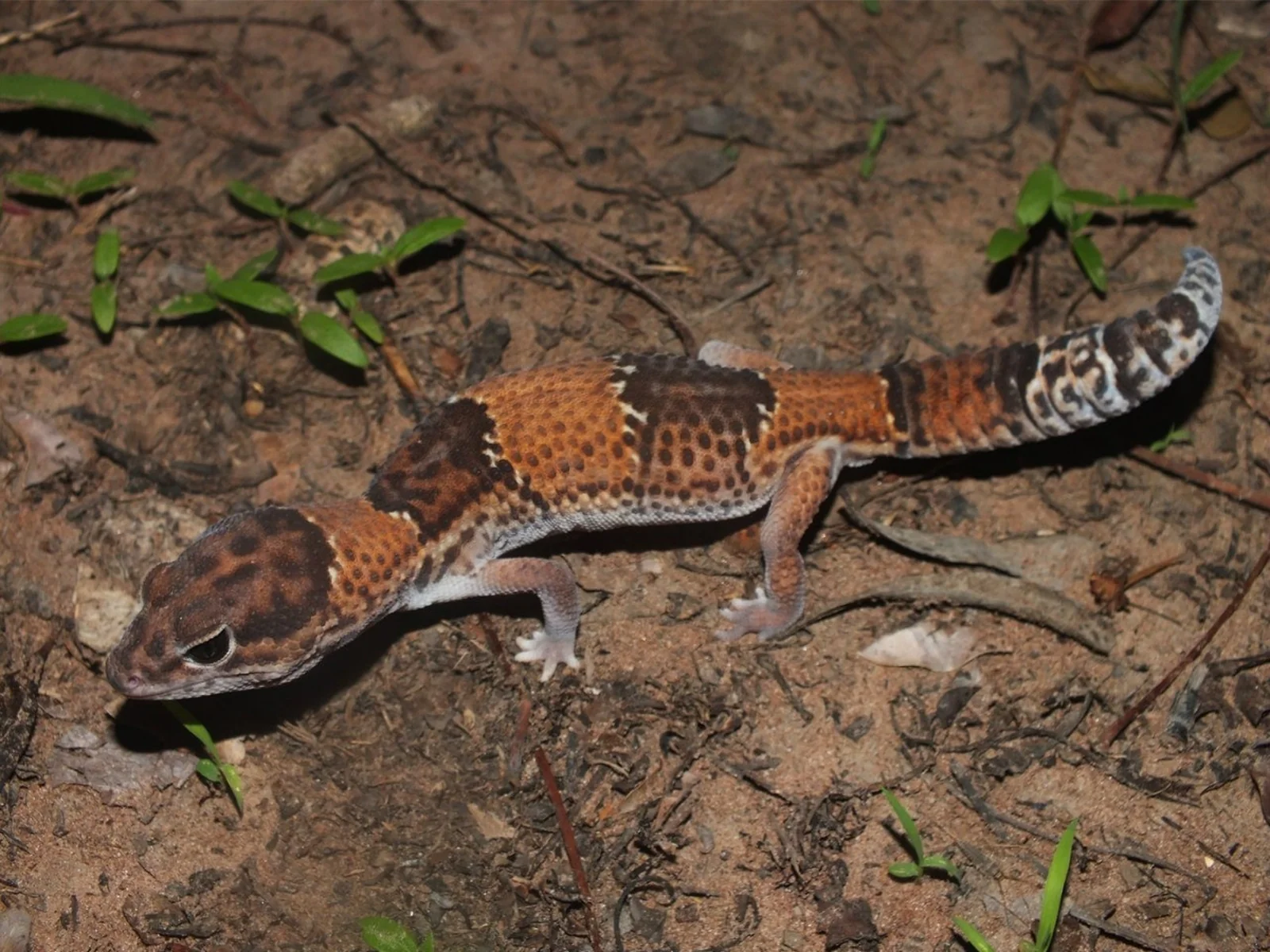
African Fat-tailed Gecko
Hemitheconyx caudicinctus
A secretive, crepuscular eyelid gecko from West African savanna, with a fat-storing banded tail, moderate size, and a calm temperament when given a warm hide, moderate humidity, and a varied insect diet.
Overview
The African fat-tailed gecko (Hemitheconyx caudicinctus) is a ground-dwelling eyelid gecko from the savannas of West Africa. It has movable eyelids and clawed toes rather than sticky toe pads, so it cannot climb smooth glass. Adults are usually about 6-10 inches long, with a thick banded tail that stores fat. Captive-bred animals are widely available. IUCN lists the species as Least Concern; international collection for the pet trade is a noted use, and the March 2026 CITES Appendices do not list this species. Choose captive-bred animals.
Native Regions
Senegal, Gambia, Guinea-Bissau, Guinea, Mali, Mauritania, Côte d'Ivoire, Burkina Faso, Ghana, Togo, Benin, Niger, Nigeria, Cameroon
Habitats
Dry Sahel and dry to moist savanna, Rocky woodland edges, crevices, and leaf litter, Burrows and other daytime shelters
Adult Length
Usually about 6-10 inches (15-25 cm) total length
Adult Weight
Often about 40-80 grams; published ranges extend to about 90 grams
Lifespan
15–20 years
For Beginners
A reasonable step up from a leopard gecko for a careful keeper who can provide live insects, a thermostatically controlled warm hide, and steady moderate humidity. It is a poor match for a dry, sparse setup. Incorrect heat, a missing humid hide, loose sand, or cohabitation are common failure points. Plan on an adult enclosure of at least 36 x 18 x 18 inches.
For Experienced Keepers
Experienced keepers can add a deeper soil-sand-clay substrate after quarantine, a measured low UVB gradient, and an optional cooler, drier season for healthy adults only. Breeding needs a nest site, incubation space, and enough recovery time between clutches.
Key Points
- › Crepuscular to nocturnal terrestrial gecko that stores fat in a banded tail.
- › Needs a measured warm hide, daytime humidity around 60-70%, a humid retreat, and low-level UVB.
- › Best housed alone and fed a varied gut-loaded insect diet with calcium support.
Appearance & Behavior
Adults are usually about 6-10 inches (15-25 cm) in total length. The tail can make up a large share of that length and should look rounded and segmented when the gecko is in good condition. Wild-type animals are brown to tan with broad dark bands; some have a pale stripe from the head onto the tail. Captive breeding has produced additional colors. The skin is bumpy, the pupils are vertical, and the eyelids move. Males tend to have a broader head and neck, a V-shaped row of enlarged preanal pores, and hemipenal bulges at the tail base. Those traits become clearer with maturity; sexing very young juveniles is unreliable.
Normal Behavior
Active mainly at dusk and night, and hidden in burrows, crevices, or hides by day. They hunt by sight, may lick surfaces, and sometimes raise and wave the tail while hunting or when nervous. Males can make quiet squeaks or clicks during disputes. A plump tail is a normal fat store. A regenerated tail grows back shorter and blunter than the original.
Social Behavior
These geckos are territorial and are not known to live in groups. Adult males may fight severely. Mixed pairs can lead to stress and repeated breeding. Keep one gecko per enclosure except for brief, supervised breeding introductions by an experienced keeper.
Warning Signs
A thin or shrinking tail, sudden weight loss, wrinkled skin, lethargy with no normal night activity, tremors, a soft jaw, swollen limbs, retained shed on the toes, tail tip, or eyes, squinting, bloating, straining, unusual droppings, mouth swelling or discharge, or wounds need a husbandry review and care from a qualified exotic veterinarian.
Key Points
- › Banded, terrestrial eyelid gecko with a fat-storing tail.
- › Crepuscular to nocturnal, and hidden through the day.
- › House singly outside brief breeding introductions.
Enclosure & Environment
Enclosure Size
Minimum about 36 x 18 x 18 inches (90 x 45 x 45 cm) for one adult. Older clinic sheets still mention 10- or 20-gallon tanks, which are too small for a useful gradient, several hides, and burrowing room. Larger floor space is better. Juveniles can start in a simpler secure enclosure and should move up as they grow.
Enclosure Type
Well-ventilated glass, PVC, or wooden terrestrial vivarium with a secure lid or front doors.
Substrate
Use paper towel for quarantine, juveniles, and any gecko that is thin or not yet feeding reliably. Healthy adults that have passed quarantine may use a compacted soil, sand, and clay mix several inches deep so they can burrow, with the surface firm rather than dusty. Feed in a dish so insects are not coated in substrate. Avoid calcium sand, pure loose sand, wood shavings, and other loose particles that are easy to swallow.
Heating
The warm hide should run about 90-92°F. The cool side should sit about 72-80°F by day, and overnight temperatures about 70-75°F. Measure the warm hide with a probe and check surfaces with an infrared thermometer so exposed spots under the lamp do not run hotter than the warm hide. A small guarded heat mat under the warm hide, separated from the animal by substrate and run on a thermostat, can supplement a lamp. It should not be the only heat source. Juveniles and newly arrived geckos should stay on this warmer schedule. A cooler dry-season cycle, with a warm hide near 79°F and nights that may fall into the mid-60s°F, is optional only for healthy established adults and should stop if the gecko loses condition.
Humidity
Keep daytime relative humidity about 60-70% with enough ventilation that the air does not stay stagnant. A humid hide with damp paper towel or a clean moisture-holding substrate should be available all the time, including between sheds. Seasonal setups may run nearer 50% by day in a drier period and about 70-80% by day in a wetter period, with higher humidity at night. Mist with a sprayer if the air is too dry, and keep the humid hide moist without letting it sour or flood.
Lighting
Provide about 12 hours of light, or about 11-13 hours if you shift day length with the seasons. Lights go off at night. Low-level UVB is recommended even though the gecko is mainly active in dim light. Treat it as a Ferguson Zone 1 animal: about UVI 0.5-1.0 on the exposed warm area, with shaded retreats down to nearly zero. Use a low-output T5 tube over only part of the warm end, follow the lamp's distance guidance, and replace or meter the bulb on schedule. The gecko must be able to avoid the light.
Décor & Enrichment
Provide tight hides on the warm and cool ends, a separate humid hide, cork, leaf litter, low sturdy branches or rocks, and a shallow water dish. The layout should feel enclosed. An open box with a single hide is stressful even when the temperatures are correct.
Cleaning & Maintenance
Remove feces daily, refresh water daily, and rewet or replace the humid-hide substrate as soon as it dries out or soils. Clean that hide about every two weeks, sooner if it smells or grows mold. Replace loose substrate every few months if it is not a managed bioactive setup. Wash hands with soap and water after handling the gecko, its food, or anything in the enclosure. Healthy reptiles can carry Salmonella. Keep the enclosure and its equipment out of kitchens and other food areas. Children under 5 years old should not handle reptiles or their habitats.
Key Points
- › Use at least 36 x 18 x 18 inches, with warm, cool, and humid hides.
- › Hold the warm hide near 90-92°F and daytime humidity near 60-70%.
- › Provide low-level UVB and keep new or young geckos on paper towel.
Diet & Nutrition
African fat-tailed geckos are insectivores. Offer a variety of appropriately sized live invertebrates rather than one feeder species.
Food Types
Staples include gut-loaded crickets, dubia or discoid roach nymphs, and locusts. Black soldier fly larvae, silkworms, and mealworms can add variety. Waxworms, butterworms, and hornworms are occasional treats because fatty larvae are easy to overfeed. Routine pinky mice are not recommended. These geckos do not need a vegetable diet.
Feeding Schedule
Feed juveniles daily or every other day. Feed young adults about every two or three days. Feed healthy adults about every four or five days, less often if the tail is already wider than the neck and more often if the tail is thinning outside a planned cool season. Remove uneaten insects so they do not bite the gecko.
Supplements
With a correct low-level UVB gradient, dust most meals with plain calcium carbonate that does not contain vitamin D3, and use a reptile multivitamin about twice a month. If UVB is not provided, use calcium with D3 on a limited schedule instead. Do not combine several D3 or vitamin products. Follow the label as a ceiling, and ask a reptile veterinarian before increasing doses. Powder cannot replace correct heat, gut-loading, or UVB.
Hydration
Provide a shallow dish of clean water at all times and change it daily. The gecko may also drink droplets after misting. The humid hide supports hydration and shedding. A water dish is still required when the enclosure is misted.
Preparation
Gut-load insects for 24-48 hours on a nutritious diet and provide them with water. Offer prey no wider than the space between the gecko's eyes, from a dish or bare feeding surface so substrate is not swallowed with the meal.
Common Mistakes
Feeding only fatty larvae, offering pinky mice on a schedule, skipping gut-loading or calcium, leaving live prey in the enclosure, feeding on loose sand, and copying a very dry leopard gecko diet-and-humidity setup are frequent errors.
Key Points
- › Varied gut-loaded insects are the diet.
- › Match portions to age and tail condition.
- › Use plain calcium with UVB, and keep D3 supplementation limited.
Handling
Many African fat-tailed geckos tolerate short, calm handling once they are settled. Handling is optional and should stay brief. It is a way to check the animal, not proof that it enjoys contact.
Techniques
Wait at least two weeks after arrival, and wait longer if the gecko is not eating. Work in the evening. Let the gecko approach, then scoop from below so the feet, body, and tail are supported. Start with sessions of about five minutes near a low, soft surface.
Do's & Don'ts
Never grab or restrain the tail. These geckos can drop it, and the replacement is shorter and stores less fat. Do not handle during the day if the gecko is asleep in a hide, immediately after a large meal, or to the point of struggle. Wash hands afterward. Children under 5 years old should not handle the gecko or its enclosure, because reptiles can carry Salmonella even when they look healthy.
Taming
Regular short sessions work better than long ones. Some individuals stay more secretive than others. Choice and consistency matter more than forcing contact.
Stress Signals
Backing away, biting, frantic movement, or repeated attempts to escape mean the session should end. Continued hiding and refusal to eat after handling also mean the gecko needs more time.
Key Points
- › Support the body and tail; never restrain the tail.
- › Keep sessions short and in the evening.
- › Stop when the gecko tries to escape.
Health & Wellness
Common Health Issues
Metabolic bone disease
Description
A nutritional and husbandry disorder linked to insufficient calcium, vitamin D3, or UVB, and sometimes to the calcium demand of repeated egg laying.
Symptoms
Tremors, a soft jaw, swollen or bowed limbs, weakness, and fractures.
Prevention
Provide a correct warm hide, low-level UVB, gut-loaded insects, and a calcium and vitamin schedule matched to whether UVB is used.
Treatment
Contact a qualified exotic veterinarian promptly. Do not try to diagnose or medicate this at home.
Retained shed
Description
Incomplete shedding, especially on toes, the tail tip, the head, and around the eyes. Repeated cases usually trace back to humidity, hydration, or missing rough surfaces.
Symptoms
Dry skin stuck to toes or the tail tip, swollen digits, and squinting or closed eyes.
Prevention
Keep a clean humid hide available at all times, hold daytime humidity near 60-70%, and provide rough surfaces the gecko can rub against.
Treatment
Correct the humid hide first. A brief stay in a ventilated container with damp paper towel can soften stuck skin. Do not pull dry skin from toes or eyes. See a reptile veterinarian if shed remains stuck or toes look swollen.
Gastrointestinal impaction
Description
A blockage or severe slowing of the gut, often after swallowed substrate, oversized prey, dehydration, or temperatures that are too cool.
Symptoms
Bloating, straining, constipation, and refusal to eat.
Prevention
Keep the warm hide in range, offer prey no wider than the space between the eyes, use paper towel for young or new geckos, and feed adults off loose substrate.
Treatment
Contact a qualified exotic veterinarian. Do not give oils, laxatives, or other home treatments.
Internal parasites
Description
Intestinal parasites are a particular concern in wild-caught animals and in new arrivals of uncertain origin. Captive-bred geckos can also carry them.
Symptoms
Weight loss, a shrinking tail, poor appetite, and runny or foul droppings.
Prevention
Quarantine new geckos, keep records of weight and droppings, and ask a reptile veterinarian for a fecal check when origin or stool quality is uncertain.
Treatment
Diagnosis and medication belong with a qualified exotic veterinarian. Do not use leftover or pet-store parasite drugs.
Tail loss and poor body condition
Description
The tail stores fat and can be dropped when the gecko is grabbed or threatened. A regenerated tail is shorter and blunter. A thin tail can also mean underfeeding, low temperatures, parasites, or stress.
Symptoms
A missing or freshly dropped tail, a very thin tail, or a tail that keeps shrinking despite feeding.
Prevention
Never restrain the tail, house geckos singly, and adjust feeding so a healthy tail stays rounded without becoming obese. An obese gecko may have a tail wider than the neck and may move less.
Treatment
Keep the wound clean and the enclosure simple, and ask a reptile veterinarian to examine a fresh tail drop, infection, or unexplained weight loss.
Preventative Care
Schedule an exam with a reptile veterinarian for new geckos, including a fecal check when origin is uncertain, and plan on at least a yearly exam afterward. Weigh the gecko regularly, watch the tail, and record meals, sheds, and droppings. Quarantine new arrivals on paper towel, especially if other reptiles already live in the home. Wash hands after contact, and keep children under 5 away from the gecko and its habitat because healthy reptiles can carry Salmonella.
Emergency Signs — seek vet care immediately
Seek prompt care from a qualified exotic veterinarian for a shrinking tail or weight loss, tremors, a soft jaw, swollen limbs, retained shed that is tightening toes or covering the eyes, bloating or straining without droppings, foul droppings, mouth swelling or discharge, open wounds, bleeding, or a gecko that stays limp and does not resume normal night activity. These signs are not a home diagnosis.
Key Points
- › Most problems trace to heat, humidity, diet, or stress.
- › A thin tail, stuck shed, and tremors need veterinary attention.
- › Wash hands after contact; healthy geckos can still carry Salmonella.
Breeding
This species is egg-laying and has temperature-dependent sex determination. Females can produce more than one clutch in a season. There is no parental care after the eggs are laid. Breeding is a project for keepers who can house offspring separately and support the female between clutches.
Preparation
Breed only healthy, well-fed adults. Males are often mature around 12-18 months. Females are sometimes reported as mature earlier, but they should be fully grown and in good condition before breeding, generally around 18 months or later. House adult males apart. Provide a moist nest box so the female has a place to lay, including if eggs are infertile.
Breeding Process
Courtship and mating should be supervised and temporary. Males may bite the female's neck during mating. Separate the animals if either is injured or persistently stressed. After laying, the female needs continued food, calcium support, and a recovery period before another clutch.
Egg Care
Eggs are typically incubated in a moist medium. Published accounts give about 6-12 weeks, or roughly 40-70 days, with warmer incubation finishing sooner. A university summary of Viets (1993) reports mostly females around 75-82°F, mixed sexes around 84-87°F, and mostly males around 88-90°F. Those bands were not re-checked against the original study, so they are a reported pattern rather than a guaranteed protocol. Very hot incubation can reduce hatch success.
Hatchling Care
Hatchlings should be housed alone or in a way that prevents competition with larger geckos. Offer tiny gut-loaded insects, a warm hide in the standard 90-92°F range, a humid hide, and paper towel until they are feeding and growing reliably. Keep them on the warmer schedule rather than a cool-season cycle.
Key Points
- › Clutches are small, and sex is influenced by incubation temperature.
- › Wait until females are fully grown before breeding.
- › Provide a moist nest site and separate housing for hatchlings.