
Oriental Fire-Bellied Toad
Bombina orientalis
A small, diurnal, semi-aquatic frog with a vivid warning-colored belly that needs cool temperatures, clean dechlorinated water, and minimal handling.
Overview
The Oriental fire-bellied toad is a small, day-active amphibian from northeastern Asia. It spends much of its time in shallow, slow-moving water but also needs accessible damp land, cover, and a secure enclosure. Its bright orange-red belly advertises irritating defensive skin secretions.
Native Regions
Northeastern China, Korean Peninsula, Russian Far East
Habitats
Slow-moving streams and ponds, Pools, marshes, and ditches, Mixed and coniferous forests, Open meadows and river valleys, Swampy shrublands
Adult Length
2-2.5 inches (5-6 centimeters)
Adult Weight
Not reliably published in the selected sources
Lifespan
12–20 years
For Beginners
This can be an introductory amphibian when the keeper is prepared to maintain water quality, humidity, temperature, live feeders, and supplement schedules. It is a display animal rather than a pet for routine handling.
For Experienced Keepers
Experienced keepers can refine planted paludarium filtration, water chemistry monitoring, seasonal cycling, quarantine, and breeding while avoiding overcrowding and overheating.
Key Points
- › Provide a cool, ventilated, semi-aquatic enclosure with shallow dechlorinated water.
- › Offer varied, gut-loaded invertebrates with carefully dosed calcium and vitamins.
- › Observe rather than handle; skin secretions can irritate eyes, mouth, and broken skin.
Appearance & Behavior
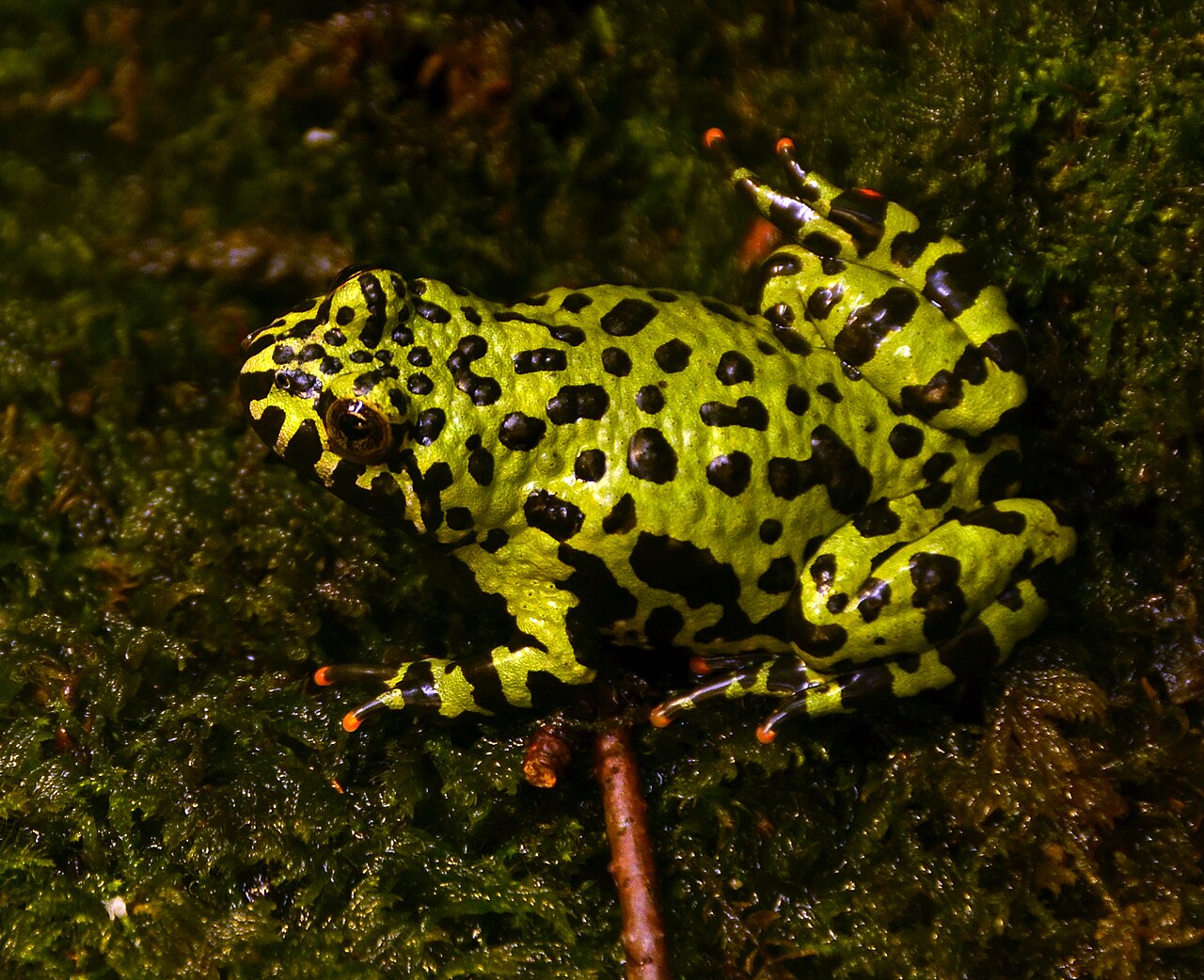
Adults are about 2-2.5 inches (5-6 centimeters) long. The warty back ranges from brown-gray to bright green with dark markings, while the smooth underside is marbled orange-red or yellow and dark. Males develop nuptial pads on the first and second fingers.
Normal Behavior
These toads are diurnal and commonly float or rest in shallow water, forage for live prey, and use land or cover as needed. When threatened, they may arch their body and expose the warning-colored belly in the Unken reflex.
Social Behavior
Conspecific groups are usually possible when the enclosure is large enough and all animals are similarly sized and compatible. Provide multiple resting and hiding sites, monitor feeding, separate fighting animals, and never mix species.
Warning Signs
Persistent hiding, lethargy, appetite loss, difficulty moving or swimming, abnormal posture, excessive shedding, red or damaged skin, swelling, discharge, or breathing difficulty warrant prompt husbandry review and veterinary advice.
Key Points
- › A day-active, semi-aquatic display species.
- › Bright belly coloration warns of irritating skin secretions.
- › Small compatible groups can be housed with adequate space and monitoring.
Enclosure & Environment
Enclosure Size
At least 24 x 12 x 12 inches for two to three adults; provide more floor area and at least about four additional gallons for each additional toad.
Enclosure Type
Watertight semi-aquatic aquarium or paludarium with a secure screened lid.
Substrate
Use moisture-retentive, additive-free coconut fiber, suitable soil, leaf litter, damp moss used with attention to pH, or large smooth rocks and cork that cannot be swallowed. Avoid small gravel, loose bark chips, rough carpet, cedar, and pine.
Heating
Most rooms need little or no added heat. Maintain a cool ambient zone of 68-75°F and, only if needed, a thermostatically controlled warm area of 75-78°F; allow nights around 65-70°F. Measure both land and water and never let the habitat exceed 82°F.
Humidity
Maintain about 65-80% relative humidity while preserving fresh airflow. The water section, damp land, and plants usually provide moisture; mist only with dechlorinated water and do not allow stagnant, sour substrate.
Lighting
Provide a consistent 10-12 hour day cycle and gentle low-output UVB, with dense shaded retreats. Keep the lamp above mesh rather than glass, follow measured distance and replacement guidance, and avoid heat-producing or continuous night lighting.
Décor & Enrichment
Provide plants, cork, half logs, smooth rocks, and hides in both zones. Keep water shallow, low-current, and easy to exit. Give each group member more than one resting or hiding option.
Cleaning & Maintenance
Remove waste and uneaten prey daily. Use conditioned, dechlorinated water and gentle biological filtration or frequent water changes; monitor temperature and water quality, including ammonia and nitrite. Rinse away all disinfectant residue before returning the toads.
Key Points
- › Use a secure semi-aquatic enclosure with easy exits from shallow water.
- › Clean dechlorinated water and cool temperatures are essential.
- › Balance high moisture with effective ventilation and shaded cover.
Diet & Nutrition
Adults are insectivores that need varied live invertebrates rather than a single staple prey.
Food Types
Rotate appropriately sized crickets, small earthworms, roach nymphs, black soldier fly larvae, fruit flies, silkworms, and similar invertebrates. Reserve fatty waxworms and harder mealworms for occasional use.
Feeding Schedule
Feed juveniles about every other day and adults once or twice weekly, adjusting to body condition. Observe group feedings so each animal eats.
Supplements
Use an amphibian-appropriate calcium product with vitamin D3 and a multivitamin that supplies a safe vitamin A source. PetMD recommends calcium at each feeding and multivitamin once or twice weekly; because UVB and product strengths vary, confirm the long-term schedule with an amphibian veterinarian and follow label limits.
Hydration
Hydration is primarily through the skin. Maintain constant access to clean, shallow, dechlorinated water with easy exits; never use distilled water as the routine source.
Preparation
Use prey no wider than the toad's head. Gut-load insects for at least 24 hours, dust them immediately before feeding, and remove prey not eaten within about 15 minutes.
Common Mistakes
Avoid unvaried diets, oversized prey, excessive fatty or high-chitin feeders, un-gut-loaded insects, supplement overdosing, overfeeding, and leaving drowned prey to foul the water.
Key Points
- › Feed a varied rotation of appropriately sized live invertebrates.
- › Gut-load and dust feeders without exceeding product directions.
- › Track body condition and water cleanliness during feeding.
Handling
This species should be observed rather than routinely handled because amphibian skin is easily damaged and its defensive secretion can irritate human tissues.
Techniques
When movement is necessary, use a soft fine-mesh barrier or brief, gentle contact with powder-free disposable gloves moistened with dechlorinated water.
Do's & Don'ts
Keep handling brief; prevent contact with eyes, mouth, and open wounds; wash hands after enclosure work; and keep soaps, lotions, and chemicals away. Never squeeze or restrain a struggling toad.
Taming
Do not attempt to tame the toad through repeated handling. Build predictable care routines and let it acclimate to observation and feeding without forced contact.
Stress Signals
Stop if the animal struggles, repeatedly attempts escape, flattens or arches defensively, exposes its belly, secretes a milky substance, becomes immobile, or shows abnormal breathing.
Key Points
- › Not suitable for routine handling.
- › Use moistened powder-free gloves only when contact is necessary.
- › Avoid exposure to both human skin contaminants and the toad's secretions.
Health & Wellness
Common Health Issues
Bacterial skin disease and red-leg syndrome
Description
Opportunistic bacterial disease is associated with stressors such as poor water quality, crowding, temperature problems, and inadequate sanitation; red limbs or abdomen are not diagnostic by themselves.
Symptoms
Redness, swelling, skin sores, weakness, appetite loss, abnormal balance, or behavior changes.
Prevention
Maintain clean tested water, appropriate temperatures, low stocking density, quarantine, hygiene, and minimal handling.
Treatment
Isolate the affected animal as advised and contact a qualified amphibian or exotic veterinarian promptly for diagnosis and prescribed treatment.
Nutritional disease and metabolic bone disease
Description
Poor prey variety or imbalanced calcium, vitamin D3, vitamin A, and UVB provision can contribute to malnutrition and skeletal disease.
Symptoms
Weakness, poor movement or prey capture, abnormal posture or limbs, fractures, appetite change, or declining body condition.
Prevention
Feed varied gut-loaded prey, use measured amphibian supplements, provide appropriate low-level UVB with shade, and review the regimen during veterinary wellness care.
Treatment
Contact a qualified amphibian or exotic veterinarian; do not attempt high-dose vitamin, calcium, or UVB treatment without veterinary direction.
Chytridiomycosis and other fungal skin disease
Description
Amphibian fungal infections can spread quickly and may resemble bacterial or husbandry-related skin problems.
Symptoms
Appetite or weight loss, excessive shedding, pale or gray skin, abnormal posture, weakness, or cotton-like skin growths.
Prevention
Quarantine new amphibians for 6-8 weeks, use separate equipment, maintain sanitation and correct husbandry, and seek veterinary screening when indicated.
Treatment
Consult a qualified amphibian or exotic veterinarian immediately for testing and species-appropriate prescription treatment; never medicate the enclosure empirically.
Preventative Care
Record appetite, behavior, body condition, temperature, humidity, and water quality; quarantine newcomers for 6-8 weeks with separate tools; maintain strict hygiene; and arrange regular wellness review with an amphibian-experienced veterinarian.
Emergency Signs — seek vet care immediately
Seek prompt amphibian-experienced veterinary care for breathing difficulty, severe weakness, inability to move normally, marked swelling or bloating, bleeding, extensive redness or skin lesions, eye or mouth discharge, repeated abnormal shedding, or prolonged refusal to eat.
Key Points
- › Water quality, temperature, nutrition, crowding, and handling strongly affect amphibian health.
- › Skin changes are nonspecific and need veterinary diagnosis.
- › Quarantine and separate equipment reduce infectious-disease risk.
Breeding
Wild breeding begins after winter dormancy as temperatures rise in spring and may continue over a long reproductive period.
Preparation
Breed only healthy, mature animals with a plan for offspring, veterinary biosecurity, stable water quality, and species-appropriate seasonal conditioning. The selected sources did not establish a captive protocol safe enough to prescribe.
Breeding Process
Males call from the water and grasp females in amplexus. Females deposit 40-110 eggs individually or in small clumps close to the water surface.
Egg Care
Keep eggs in clean, stable, species-appropriate water away from adults. Because the selected sources did not provide a complete captive egg protocol or hatching interval, consult an experienced amphibian breeder or veterinarian rather than improvising temperature or medication.
Hatchling Care
Larvae initially consume detritus, algae, fungi, plant material, and protozoans, then broaden their diet before metamorphosis. Smithsonian reports metamorphosis at about 8-14 weeks; newly metamorphosed froglets require tiny live prey and careful water access.
Key Points
- › Seasonal cooling precedes spring breeding in the wild.
- › Females lay 40-110 eggs near the water surface.
- › Do not attempt breeding without a complete biosecure larval-care plan.